

Wearable health devices promise better monitoring and preventive care, but a new study shows their rapid growth could quietly add millions of tonnes of carbon emissions raising tough questions about sustainable design in digital healthcare.
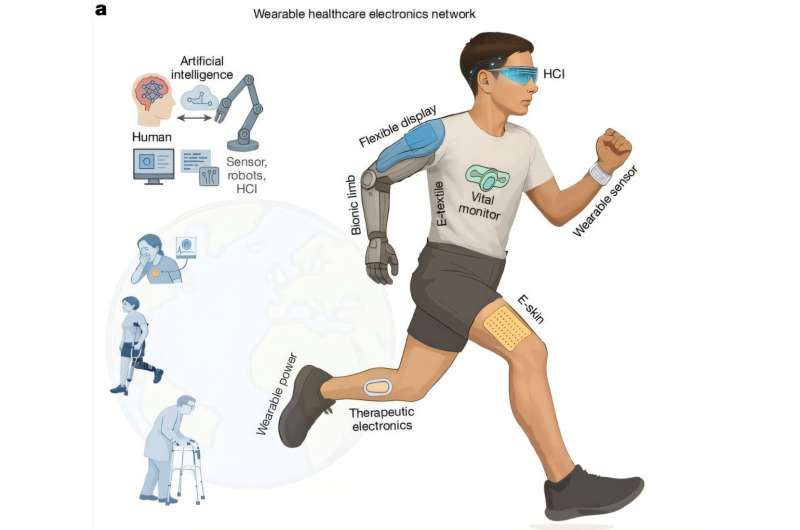
A new Nature study reveals that the booming adoption of wearable health devices could carry a significant and largely overlooked environmental cost, with lifecycle emissions rivaling those of major industries. Researchers from the University of Chicago and Cornell University found that commonly used wearable healthcare electronics emit 1.1–6.1 kg CO₂-equivalent per device across their lifecycle, and projected global emissions could reach about 3.4 million metric tons of CO₂-equivalent annually by 2050 as usage surges.
The analysis comes as global consumption of wearable health tech including continuous glucose monitors, ECG and blood-pressure monitors, and point-of-care ultrasound patches is expected to increase roughly 42-fold by mid-century, approaching nearly 2 billion units per year.Life-cycle emissions concentrated in components: The study’s cradle-to-grave life-cycle assessment shows that the bulk of a device’s carbon footprint stems not from use, but from manufacturing and materials, particularly printed circuit boards and semiconductors.
In fact, more than 95 % of a continuous glucose monitor’s CO₂ footprint was tied to these elements, reflecting the energy-intensive processes required to refine raw materials and build integrated circuits.
Because many of these devices have short operational lives, for example, glucose monitors that are discarded and replaced every two weeks emissions scale rapidly with widespread adoption.
Environmental risks beyond carbon: Alongside greenhouse gas emissions, researchers flagged ecotoxicity and e-waste as growing concerns, given reliance on hazardous chemicals, fossil-based plastics and critical metals.The study modelled strategies including substituting critical metals like gold with lower-impact alternatives, modular designs that allow reuse of long-lived components, and shifting manufacturing to renewable energy-powered grids. While recyclable plastics had modest effect, modular architectures and greener electricity could cut per-use emissions by more than 40 %–60 % in some cases.
Tech and policy implications: As wearable health tech transitions from niche clinical tools to ubiquitous digital health infrastructure, these findings underline a need for sustainability-focused design and regulation to ensure that medical innovation doesn’t escalate environmental harm alongside public health benefits.