

Researchers transformed an insulating metal oxide into a semiconductor with exceptionally low thermal conductivity, opening possibilities for efficient thermoelectric devices and harsher operating environments.
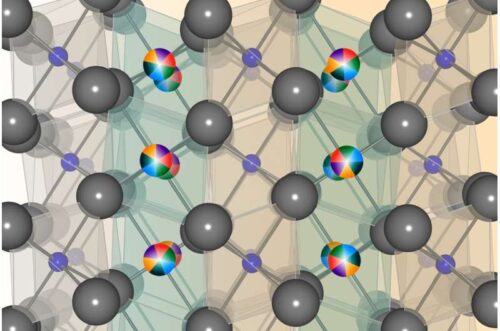
Researchers from Carnegie Mellon University and Penn State University have developed a new semiconductor material by transforming an insulating metal oxide through a high-entropy mixing technique. Their findings, published in Communications Materials, demonstrate how carefully introducing multiple elements into a single crystal structure can simultaneously improve electronic and thermal performance.
The research team incorporated manganese, iron, cobalt, nickel, copper and zinc into a tungsten oxide framework to create a material known as A₆WO₄. This high-entropy design deliberately introduces chemical disorder within the crystal lattice, narrowing the material’s electronic band gap and converting it from an insulator into a high-performance semiconductor.
Beyond its semiconducting behaviour, the material exhibited exceptionally low thermal conductivity. According to the researchers, the atomic-scale disorder disrupts the movement of heat through the crystal while preserving charge transport. Achieving these two properties together has long been a challenge for oxide-based semiconductor materials.
The combination is particularly attractive for thermoelectric technologies, which generate electricity from waste heat. Such devices require materials capable of conducting electricity efficiently while restricting heat flow, enabling improved energy conversion. The researchers believe the new design strategy could also help expand the range of readily available materials suitable for advanced semiconductor applications.
The team noted that high-entropy mixing provides more than a method of creating chemical disorder. Instead, it offers a practical approach to engineering both electronic and thermal properties within the same material, providing a new framework for designing future semiconductor compounds.
Because metal oxides are generally more resistant to heat and harsh environmental conditions than conventional semiconductor materials, the newly developed compound could prove valuable for applications operating in demanding environments. The researchers believe the approach may support the development of more resilient electronic devices while broadening the selection of functional semiconductor materials available for future technologies.