A wireless treatment uses injectable devices to create local electric fields that attack cancer cells while leaving healthy brain cells unharmed.
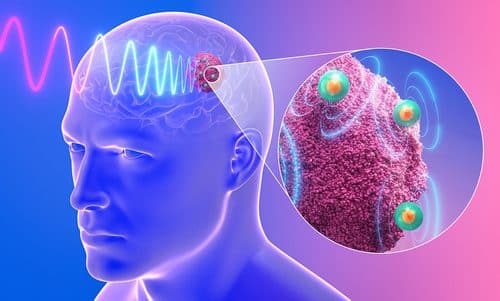
Researchers at the MIT Media Lab have developed injectable nanoantennas that can be activated wirelessly to generate localised electric fields that target glioblastoma cells while leaving healthy brain cells unharmed. In laboratory and animal studies, the technology reduced treatment-resistant tumour growth and extended survival.
The researchers call the technology HITMAN, short for highly-localised electric-field-induced tumour therapy using magnetically actuated nanoantennas. The team first tested HITMAN on tumour cells obtained from patients with chemotherapy-resistant glioblastoma at Mayo Clinic. In laboratory tests, the nanoantennas eliminated 52.2% of the cancer cells, more than five times the result achieved with temozolomide (TMZ), a standard chemotherapy drug. Healthy neurons and astrocytes were not harmed.
The researchers then implanted the patient-derived cancer cells into the brains of mice. In these orthotopic models, HITMAN inhibited tumour growth and increased median survival by more than 50%. Tests also found no detectable toxicity in major organs or surrounding healthy tissue.
The nanoantennas are activated from outside the body using a magnetic field with a frequency of no more than 200 kHz. This low frequency helps avoid tissue-damaging heat while allowing the magnetic field to pass through the skull and brain.
Inside each nanoantenna, magnetostrictive material responds to the magnetic field by undergoing mechanical stress and strain. This causes a piezoelectric film to deform and produce a localised electric field.
The electric field disrupts the bioelectric activity of glioblastoma cells. This can trigger protein unfolding, cell membrane damage, and endoplasmic reticulum stress. These effects interfere with the production of functional proteins and can lead to cancer cell death.
The researchers believe glioblastoma cells are more vulnerable because they divide rapidly and have a higher demand for protein production. Their membrane composition and intracellular structures also differ from those of healthy cells.
Control experiments confirmed that the effect came from the activated nanoantennas. Cancer cells exposed only to the nanoantennas or only to the magnetic field did not show the same response.
The treatment also reduced the formation of cancer cell colonies. The control groups produced 112–150 colonies, compared with 26 in the group treated with the nanoantennas, suggesting a possible role in reducing tumour recurrence and spread.
For future clinical use, the nanoantennas could potentially be injected through the skull. Another possible delivery method comes from Sarkar’s earlier work.