




By adding a thin carbon-based DPND coating to silicon cells, solar cells achieve higher photon utilisation, maintaining cooler temp, improving both efficiency and lifespan.
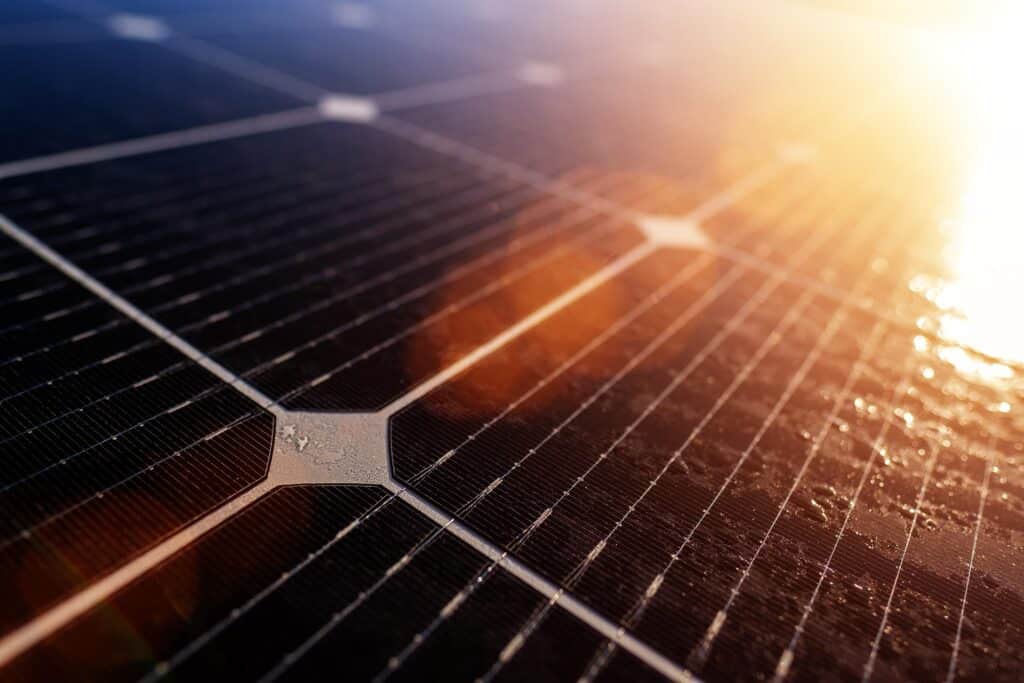
Scientists develop a new layer to solar panels making them more efficient and durable. The technology could increase panel efficiency to about 30%, compared to the current 20–25% for most commercial panels. It could also help panels stay around 2.4°C cooler, which may extend their lifespan by more than four years.
The idea is based on a process called singlet fission, which helps solar cells use sunlight more effectively. In regular silicon panels, some of the energy from high-energy blue wavelengths and green wavelengths are lost as heat. The new layer captures this light and splits it into two smaller energy packets, both of which can generate electricity. This means more sunlight is converted into power instead of being wasted as heat.
Research team from University of New South Wales (UNSW) in Sydney uses a new organic material called dipyrrolonaphthyridinedione (DPND) to build the singlet fission layer. Earlier studies used a compound called tetracene, which was unstable when exposed to air and unsuitable for mass production.
DPND is an organic material made up of carbon, hydrogen, nitrogen, and oxygen atoms. It is more stable and works well with the silicon technology already used in solar panels, allowing manufacturers to add it without changing their existing production systems.
The new layer also helps panels operate at a lower temperature, which reduces wear and improves long-term reliability. With higher output per panel, fewer panels are needed for the same amount of power, cutting installation and equipment costs.
The UNSW researchers have filed a patent for the design and are now scaling up DPND production for larger trials. The goal is to test the new layer in real-world solar systems and explore how it can be used in large-scale manufacturing.

