A cooling design uses a heat pipe layout to remove heat, helping electronic devices manage thermal loads in compact systems.
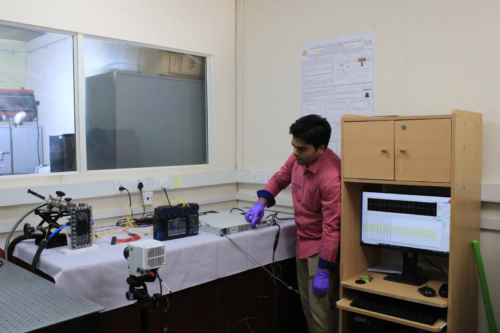
Researchers at the Indian Institute of Technology Madras (IIT Madras) have developed and tested a new flat plate pulsating heat pipe (FPPHP) design that improves heat dissipation in compact electronic devices. The design uses an antiparallel layout and an O-ring sealing method, reducing thermal resistance by 16% at higher heat loads compared to a gasket-based design. Using aluminium instead of copper further lowered thermal resistance by about 20% while reducing weight.
The work addresses a growing challenge in electronics as devices become smaller and more powerful. Excess heat can reduce performance and affect the reliability of components in products such as smartphones, servers, defence electronics, and data-centre equipment.
The FPPHP is a passive cooling device made of a flat plate with small internal channels partially filled with liquid. As one side heats up, the liquid evaporates, moves to the cooler side, condenses, and returns, creating a continuous cooling cycle without mechanical pumps.
Unlike conventional FPPHPs, where the heat source and cooling section are on the same side, the IIT Madras team placed the evaporator and condenser on opposite faces of the plate. This antiparallel arrangement makes the design suitable for space-constrained electronic systems.
The researchers compared two sealing methods—silicon gaskets and O-rings. Although the gasket version held more working fluid, the O-ring design allowed stronger liquid pulsation, resulting in better heat transfer. At a heat input of 100 W, the O-ring configuration reduced the evaporator temperature to about 69°C, compared to 75°C for the gasket design, and achieved a thermal resistance of 0.44 K/W.
The team also tested different materials and surface treatments. Aluminium versions performed better than copper while reducing weight. Making the inner channel surfaces superhydrophilic improved liquid spreading and lowered thermal resistance by another 16% compared to untreated surfaces.
According to the researchers, the design could be useful for compact consumer electronics, servers and data centres, defence and aerospace systems, and electric vehicle battery and power electronics, although application-specific testing will be required.