




A new pair of application-specific MOSFETs target high-power 48 V systems with improved dynamic current balance, eliminating the need for costly voltage matching.
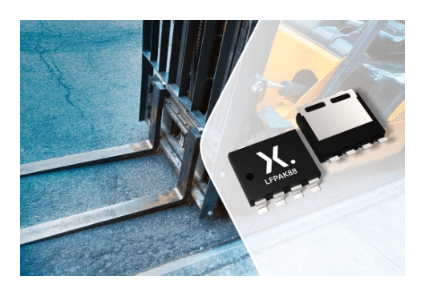
In a move to simplify high-power system design, a new series of 80 V and 100 V application-specific MOSFETs (ASFETs) have been introduced to enhance dynamic current sharing across parallel-connected devices. Aimed at 48 V motor-drive systems in electric vehicles, industrial motors, and mobility equipment, these MOSFETs address one of the most persistent challenges in power electronics—uneven current distribution during switching.
When multiple MOSFETs are used in parallel to boost current capacity and cut conduction losses, minor threshold voltage variations can lead to thermal stress and premature device failure. Traditionally, designers have relied on expensive device matching or over-specification to ensure safe operation—both inefficient and cost-heavy approaches.
The newly launched ASFETs—PSMN1R9-80SSJ (80 V) and PSMN2R3-100SSJ (100 V)—offer a more practical solution. Engineered for superior current balancing, these devices deliver up to 50% lower current delta between parallel units (up to 50 A per device) during turn-on and turn-off events. They also feature a reduced VGS(th) window, tightened to 0.6 V min-to-max, which significantly improves load-sharing consistency.
The key features are:
- Rugged 8 × 8 mm LFPAK88 copper-clip package
- Wide operating temperature range: –55 °C to +175 °C
- Designed for demanding industrial and automotive applications
In addition to these balancing enhancements, the ASFETs achieve low RDS(on) values—1.9 mΩ for the 80 V variant and 2.3 mΩ for the 100 V version—enabling higher efficiency and lower heat generation in power conversion stages. Together, these specifications provide designers with a straightforward path to achieving high reliability without custom matching or extra screening steps.
By focusing on current-sharing optimization rather than threshold matching, these ASFETs by Nexperia simplify circuit design, cut costs, and enhance system robustness—key advantages as electrification and industrial automation drive higher power demands.


