

A new neuromorphic AI platform classifies RF signals in real time while consuming less than one watt of power.
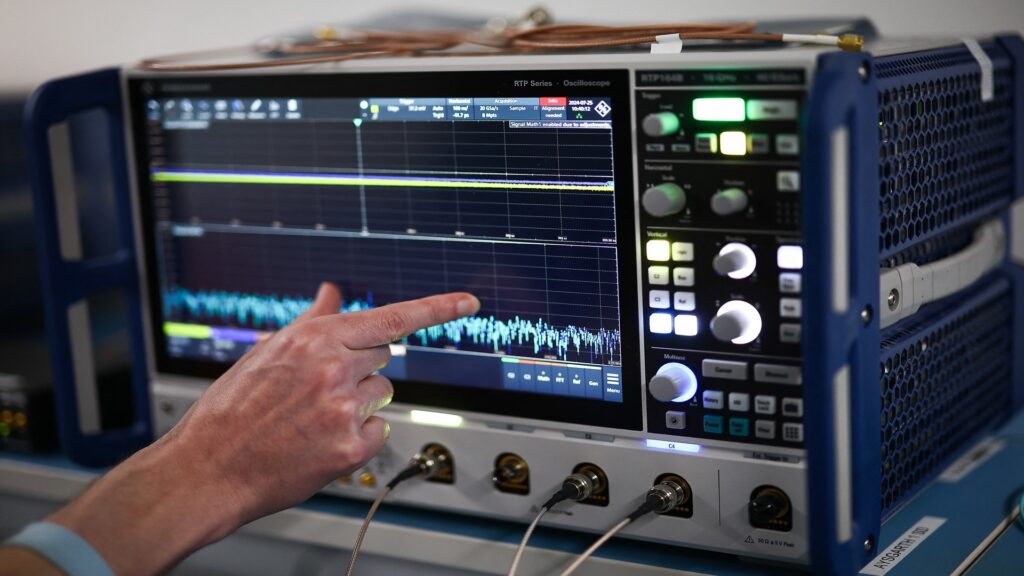
The company BrainChip has released Akida Communication Reference Platform, which is a low-power hardware platform capable of classifying radio-frequency (RF) signals in real time using less than one watt of energy. The platform uses the Akida AKD1500 neuromorphic processor to process RF signals in scenarios where energy constraints are significant.
According to BrainChip, the platform has the capability of classifying more than 20 types of signal modulations in real-time with an accuracy of 85% and above in signal-to-noise ratios of 30 decibels. This level of efficiency and capability of the product will facilitate defence and intelligence missions that need fast analysis of RF signals in real-time.
While most existing digital signal processing systems depend on a rule-based approach, BrainChip’s platform uses neuromorphic AI for the detection of both new and modified RF signals. The platform has the ability to detect unknown waveforms and use them for future training of the models. In addition, BrainChip states that its low power consumption makes it fit for battery-operated applications.
“BrainChip’s Akida Communication Reference Platform proves that real-time signal intelligence can be condensed into a portable battery powered solution to extend the range of deployment options,” said Sean Hehir, BrainChip’s CEO.

The Akida Communication Reference Platform is offered as a reference design kit for assessment and partner integration. It includes software-defined radio front end interfaces such as the USRP B205mini and EPIQ Sidekiq and can work with various host computers like the Raspberry Pi 5 for managing data and application development.
According to BrainChip, the new platform will enable engineers to create prototypes for intelligence, surveillance, reconnaissance, and signal intelligence applications using very little energy. The company claims that its new solution shows how neuromorphic computing can allow high-performance RF signal processing on edge devices which did not have enough computational capacity for AI inference before.
Low-power edge AI processors are becoming increasingly important as military and commercial users push AI capabilities closer to sensor and data sources, enabling real-time decision-making in disconnected environments.
Click here for the original announcement