Struggling to hear on your headphones in noisy rooms? The AI-powered headphones can isolate voices automatically. Read on!
Having a conversation in a noisy room often brings up the “cocktail party problem,” the difficulty of picking out a partner’s voice from all the background noise. This can be especially tiring for people with hearing difficulties.
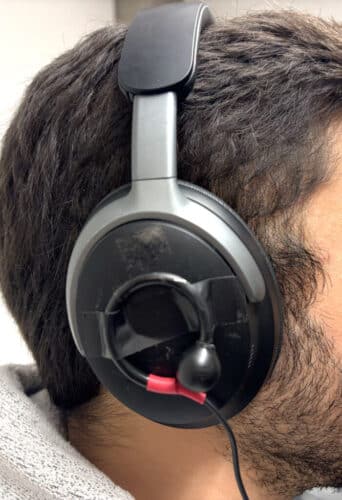
To address this challenge, researchers at the University of Washington have created smart headphones that automatically isolate the voices of conversation partners in noisy environments. The headphones use an AI model that recognizes the flow of a conversation and another model that mutes voices that don’t match that pattern, along with other background sounds. The prototype, built with standard hardware, can identify conversation partners using just two to four seconds of audio.
The developers envision this technology helping users of hearing aids, earbuds, and smart glasses filter sounds automatically, without manually guiding the AI’s focus. Unlike existing methods that rely on brain implants to track attention, the new approach uses the natural turn-taking rhythm of conversation, with AI predicting and following these patterns using audio alone.
The prototype, called proactive hearing assistants, activates when the wearer begins speaking. One AI model tracks conversation participants by analyzing “who spoke when” and detecting minimal overlap, then passes this information to a second model that isolates each voice and delivers the cleaned audio to the wearer. The system works fast enough to avoid noticeable lag and can currently handle one to four conversation partners in addition to the wearer’s own voice.
Testing with 11 participants showed that filtered audio was rated more than twice as favorably as unfiltered audio for qualities like noise suppression and comprehension. Previous AI-powered headphone prototypes required users to manually select a speaker or define a listening distance. The new system works proactively, inferring human intent automatically and noninvasively.
Challenges remain in conversations with overlapping speech, long monologues, or changing participants, though the prototype performed better than expected. Tested on English, Mandarin, and Japanese, the AI may need refinement for other languages.
The current prototype uses over-the-ear headphones, microphones, and circuitry, but future versions aim to shrink the system onto a chip small enough for earbuds or hearing aids, building on research showing AI can run on tiny devices.