Robots are moving from structured environments into human spaces. Can new strategies help them balance risk, safety, and efficiency when working alongside people?
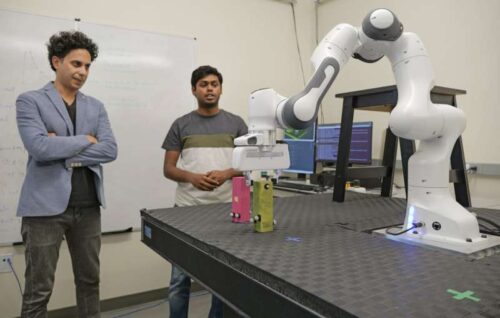
At the University of Colorado Boulder, researchers have developed a process that allows robots to make safer decisions while still completing tasks efficiently. The central challenge lies in moving robots from structured environments, where they operate independently, into unstructured settings filled with uncertainty and human interaction.
For robots to work effectively in such environments, they must interact, assess risks, and decide how much risk is acceptable. Like humans, robots rely on mental models to guide decision-making. When working with people, they attempt to predict human actions and respond accordingly. While optimized for tasks such as assembling auto parts, they must also consider human safety and behavior.
The team proposed that robots adopt an “admissible strategy.” This approach allows them to complete as much work as possible while minimizing harm. The algorithms also incorporate the concept of regret, encouraging robots to balance immediate goals with longer-term consequences. Rather than focusing only on efficiency, robots learn to act in ways they are unlikely to “regret” later.
Consider an auto factory where a robot assembles car doors next to a human inspector. If the human makes mistakes or is uncooperative, the robot can correct errors without creating danger. If necessary, it can shift work to a safer area. Like a chess player anticipating an opponent’s moves, the robot looks ahead—not to perfectly predict human behavior, but to prioritize safety.
Effective collaboration requires robots to adapt to humans rather than expecting the reverse. Robots must account for the full spectrum of human skill, from novice to expert. Achieving this adaptability allows robots to work safely with people, leading to real benefits in workplaces and society.
As robots and AI spread across industries, questions about their impact on human jobs remain. Automation can raise concerns, but it also brings opportunities. Robots may ease labor shortages in areas like healthcare for aging populations and take on physically demanding tasks that strain workers.
When integrated responsibly, robots can extend human capabilities. By combining robotic precision, reliability, and strength with human intelligence, flexibility, and judgment, collaboration becomes both safer and more effective, offering tangible benefits across many sectors.