Photorelays can handle high heat in chip testing systems. They help testers, probe cards, and burn in equipment work safely.
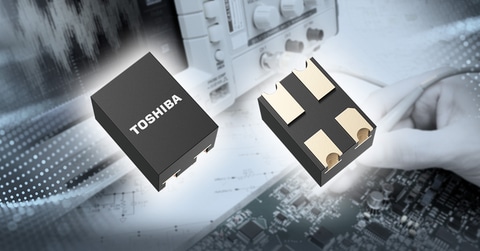
Toshiba Electronic Devices & Storage Corporation has introduced four voltage driven photorelays, TLP3407SRB, TLP3412SRB, TLP3412SRHB, and TLP3412SRLB, with a maximum operating temperature of 135°C. The devices are housed in the small S VSON4T package.
The key change is the increase in maximum operating temperature from 125°C in current products to 135°C. This was achieved by optimizing the design of the built in elements. The higher rating allows the photorelays to operate in equipment exposed to elevated temperatures.
Automotive systems are seeing higher semiconductor temperatures due to electrification and autonomous driving. Higher functional density inside vehicles increases heat levels. To ensure reliability, automotive semiconductors are tested under similar thermal conditions. As a result, testers, probe cards, burn in equipment, and related systems must also operate at high temperatures. The photorelays used in these systems must meet the same requirement.
The new products are intended for semiconductor testers used to evaluate memories, SoC, LSI, and other devices. They are also designed for probe cards and burn in equipment where stable operation at high temperature is required.

The new models are voltage driven types with built in resistors on the input side. Because of this design, no external resistor is required. This helps reduce the number of external components and lowers board space usage. In applications such as semiconductor testers and probe cards, multiple photorelays are often mounted on limited board area. A small package size and fewer external parts support compact layouts.
The S VSON4T package contributes to space savings while maintaining electrical performance. The combination of compact size, integrated input resistors, and 135°C operation makes the devices suitable for high temperature semiconductor test and evaluation equipment.