An automated monitoring technology uses thermal imaging and AI driven control to detect and correct large scale 3D printing defects instantly.
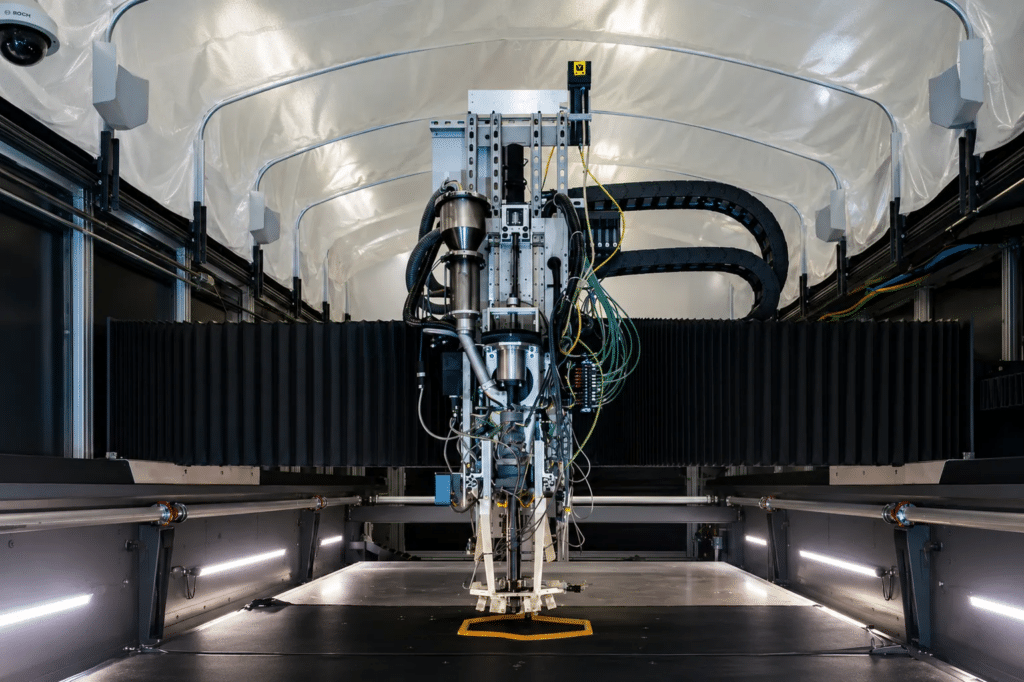
A team of researchers at Oak Ridge National Laboratory has unveiled an automated error correction system designed to improve the reliability of large scale 3D printing for plastic composite parts. Developed under the U.S. Department of Energy, the technology combines sensors, thermal imaging, computer vision, and machine learning to identify and correct manufacturing issues in real time during the printing process.
Since maintaining the right temperature balance during printing remains a major challenge, layers must stay hot enough to bond properly while retaining enough stability to hold their shape. To address this, researchers integrated thermal cameras around the robotic printing nozzle alongside sensors monitoring nozzle position, printing speed, and material temperature. Using computer vision, the system continuously analyses live thermal images to detect variations in the cooling process. If the temperature drifts away from the target range, the controller automatically adjusts print speed to maintain optimal layer fusion and structural consistency.
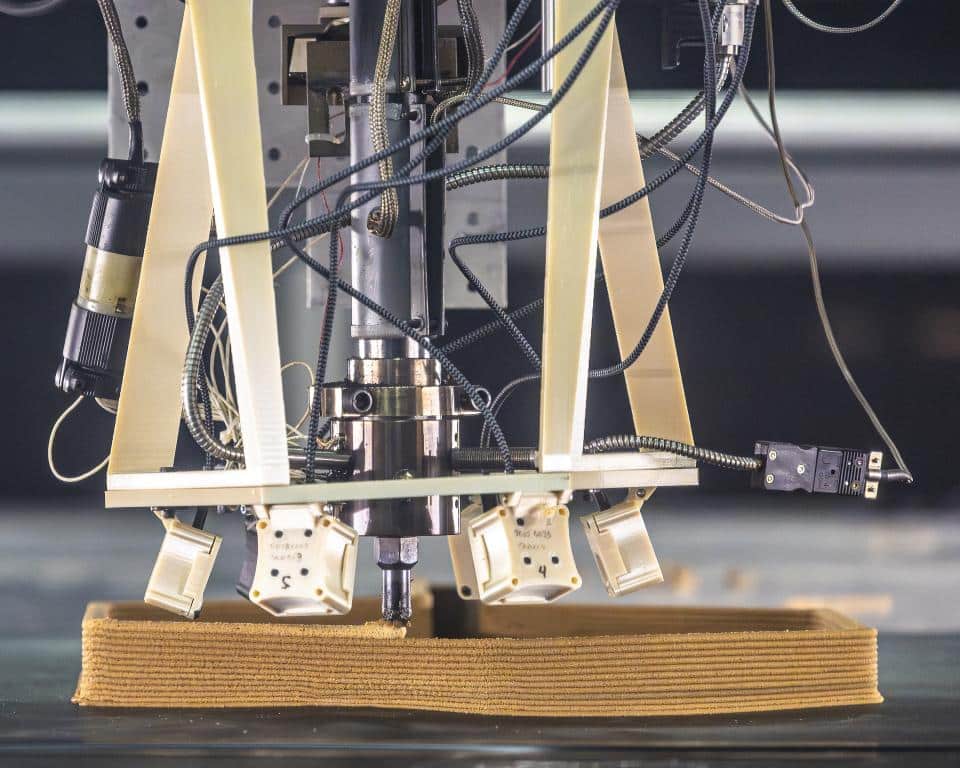
The system was tested on a large hexagonal structure bigger than a truck tire. During the trial, the controller detected material temperatures nearly 30% below the required level and autonomously corrected the process by increasing print speed. Researchers said the tool can detect temperature differences within just a few degrees, helping reduce failed prints, material waste, and production downtime.
Unlike conventional monitoring systems, the platform does not require retraining for every new design, allowing compatibility across different printer types, materials, and geometries. Researchers also created a digital twin of the printing process, enabling virtual experimentation with new shapes and manufacturing parameters without risking physical materials.

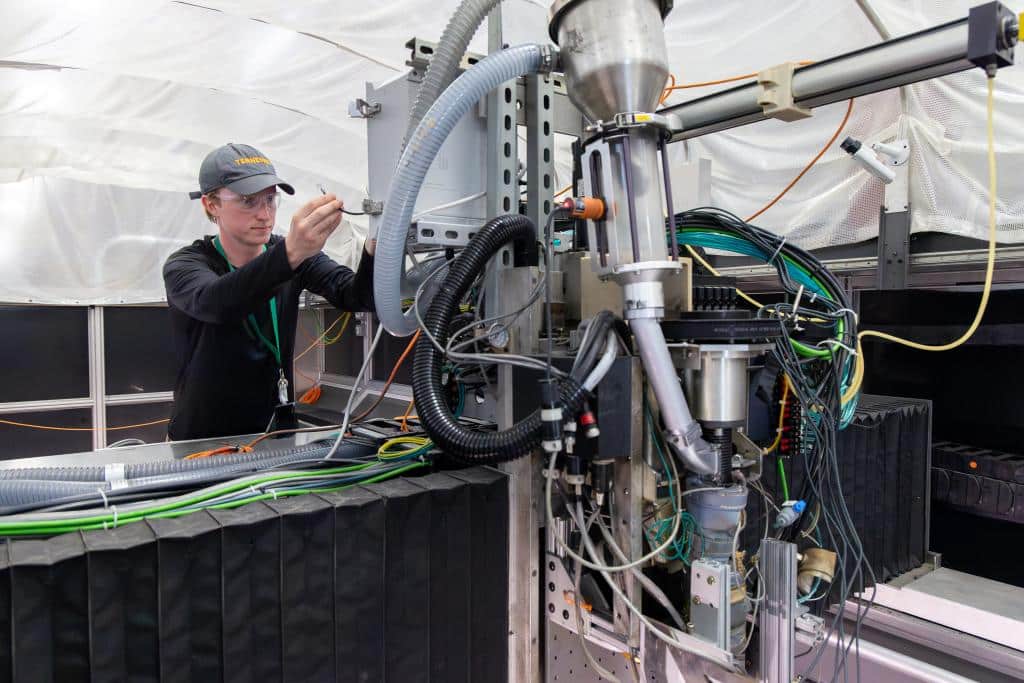
“It is novel that our controller can sense what is happening and react in real time,” says Kris Villez, Lead Researcher at ORNL. “It controls the process almost like a human would: by observing and nudging the setting until it reaches the desired outcome.”