New transparent radiative cooling film for car windows reduces cabin heat without power, cutting energy use and emissions while improving thermal management efficiency for automotive electronics and passenger comfort.
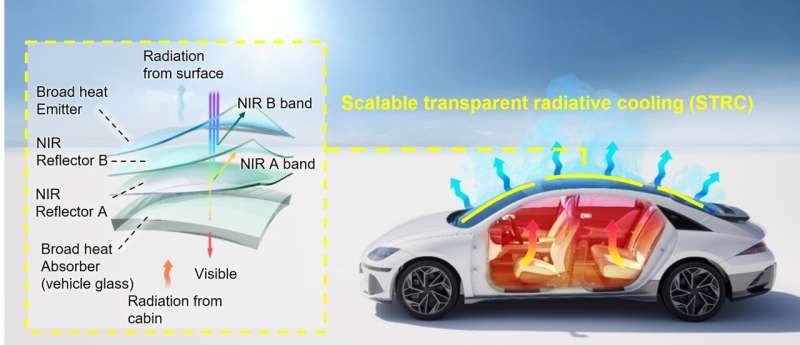
A newly developed transparent cooling film shows promise in tackling one of automotive electronics’ persistent challenges: heat buildup in both parked and moving vehicles. Researchers from Seoul National University, working with global collaborators and automakers, have engineered a multilayer transparent radiative cooling (STRC) film that can be applied directly to vehicle windows. In real-world tests, the material lowered cabin temperatures by up to 6.1°C while reducing air-conditioning energy use by over 20%.
The innovation targets a critical issue: vehicle interiors heat rapidly under sunlight, driving up cooling loads and energy consumption. Conventional window coatings and tints mainly block incoming solar radiation but fail to release trapped heat, limiting their effectiveness. The STRC film addresses both sides of the problem. Its structure allows more than 70% visible light transmission for clear visibility, while reflecting near-infrared radiation and emitting internal heat outward through mid-infrared wavelengths. This enables passive cooling without any electrical input, an important advantage for electric vehicles where thermal loads directly impact battery range.
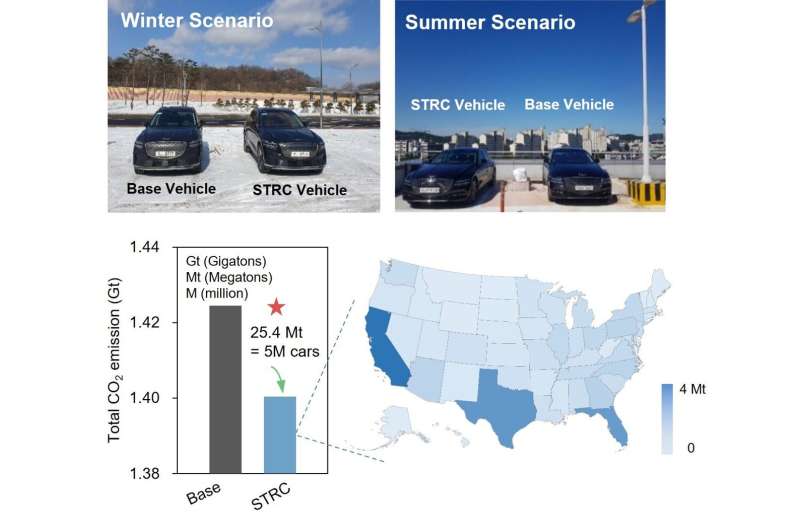
Field tests conducted across multiple countries, climates, and driving conditions confirmed consistent performance in both parked and moving vehicles. The film also reduced the time required to reach a comfortable cabin temperature by up to 17 minutes after activating air conditioning. Beyond comfort, the implications extend to sustainability and electronics efficiency. Lower cabin temperatures reduce strain on HVAC systems and onboard electronics, potentially improving reliability and energy efficiency. Simulations suggest that large-scale adoption could cut carbon emissions by around 25 million tons annually in the U.S. alone.
Unlike earlier radiative cooling solutions that were opaque and unsuitable for windows, this transparent approach marks a step toward practical deployment. The technology’s ability to integrate with existing automotive glass systems positions it as a viable solution for next-generation thermal management in vehicles. As automakers push toward electrification and smarter energy use, passive cooling materials like STRC could become a key component in managing heat without adding power demand.