What if the sky itself could guide people to safety after a tsunami warning? A new system is testing exactly that, using light, height, and speed.
A new disaster response system is being tested in Japan to help people quickly find tsunami evacuation sites. The system uses balloon-type markers that automatically rise into the air after a tsunami warning, making evacuation buildings and towers visible from far away, even at night or in poor weather.
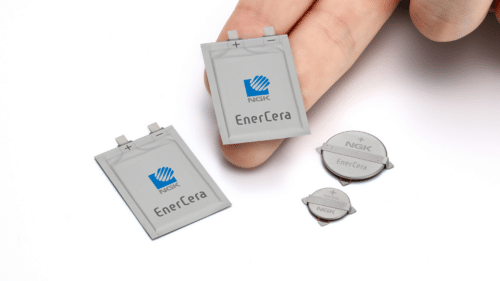
The project, led by a technical team at Tohoku University, uses NGK’s ultra-thin lithium-ion rechargeable battery, EnerCera, to power the light units inside the balloons. EnerCera enables bright and stable lighting, allowing evacuation points to be seen clearly in dark or low-visibility conditions. Its thin, lightweight design and strong environmental resistance support reliable outdoor operation.
During the demonstration tests, the system receives tsunami warnings through Japan’s Quasi-Zenith Satellite System. Once a warning is detected, gas rapidly inflates the balloon to around two meters in diameter, lifting it to a height of about 40 meters within two to three minutes. Human-shaped pictograms printed on the balloon help people quickly recognize evacuation locations simply by looking up. To improve nighttime visibility, EnerCera powers the balloon’s light source.
The trials focus on verifying whether the lighting provides sufficient brightness and whether the overall system meets practical requirements for real-world use. Wireless lighting control using EnerCera is also being evaluated to improve visibility and reduce delays during nighttime evacuation.
Fast evacuation is critical during major earthquakes, especially in coastal regions. In the event of a Nankai Trough earthquake, tsunamis could reach more than 60 municipalities within ten minutes. In crowded urban areas, evacuation towers and buildings are often difficult to locate, particularly for visitors unfamiliar with the surroundings. The balloon-based system aims to solve this problem by clearly marking evacuation sites from the sky.
By supplying EnerCera for this project, NGK is supporting the development of a new disaster prevention system. The company sees this effort as part of its broader goal to apply energy and materials technologies to improve public safety and contribute to a safer and more sustainable society.