

UC Irvine engineers develop a silicon-chip wireless transceiver hitting fiber-optic speeds that could reshape high-speed data links for future 6G and data-center electronics.
Researchers at the University of California, Irvine have unveiled a wireless transceiver system capable of processing data at speeds that rival traditional fiber-optic cables, a major milestone in electronics and communication technology that could accelerate next-generation networking and computing systems.
At the heart of the breakthrough is a novel silicon-based transceiver that pushes radio frequencies into the F-band (around 140 GHz), enabling end-to-end data transfer at about 120 gigabits per second fast enough to stream multiple 4K movies in seconds and on par with fiber performance in many scenarios.
Unlike conventional wireless chips that rely on power-hungry digital processing, the UC Irvine team re-engineered the signal chain by shifting critical functions into the analog domain. This innovative architecture eliminates traditional digital-to-analog converters in the transmitter and reduces energy demands in the receiver, addressing long-standing power and performance bottlenecks in high-speed wireless design.
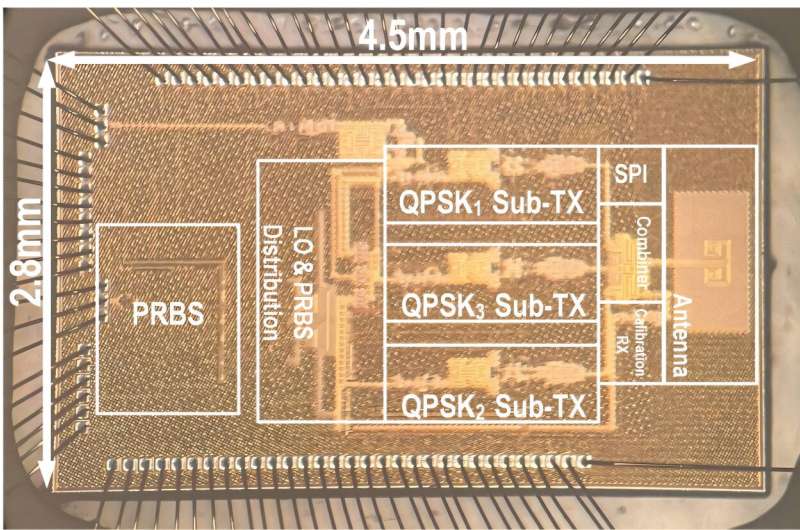
The transmitter uses a “bits-to-antenna” approach that directly constructs high-frequency radio signals with synchronized sub-transmitters, while the matching “antenna-to-bits” receiver uses a hierarchical analog demodulation method to extract data without requiring bulky, energy-intensive components. This enables efficient operation at extreme data rates with much lower power draw, making the technology plausible for future portable devices and edge systems.

Engineers involved in the research describe the system as a “wireless fiber patch cord” a nod to its ability to deliver fiber-like speed without physical cabling. By operating well above current 5G bands, the design aligns with emerging 6G and FutureG standards, and could underpin ultra-fast links between devices, robots, autonomous systems and dense data centers.
In addition to performance gains, the transceiver is fabricated using standard semiconductor processes, suggesting potential for scalable mass production. The team believes such wireless links could reduce reliance on complex wired infrastructures in data centers, cut costs and improve energy efficiency in high-performance computing environments.