RapidRadio is driving India’s automation push with indigenous RFID readers and OEM modules. How did it turn RFID into the unseen engine behind tolling, EV charging, access control, and payment devices? Dhaval Kotecha speaks with Akanksha Sondhi Gaur about the technology, vision, and strategy behind one of India’s few fully indigenous RFID hardware platforms.
Q. To begin simply, what exactly does RapidRadio do?
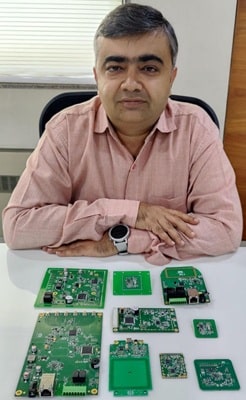
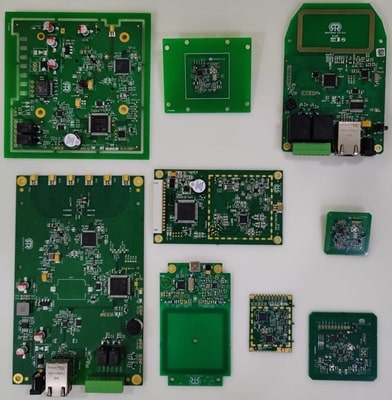
A. We are a hardware technology company focused on RFID products and solutions. RFID readers wirelessly identify tagged objects, vehicles, cards, or people using radio-frequency signals. While many may not know the term, they use RFID daily through FASTag toll booths, metro and office access cards, parking barriers, attendance systems, and industrial automation. Our core business is designing and manufacturing RFID readers, modules, antennas, and embedded systems in India for tolling, parking, libraries, EV charging, factory automation, inventory tracking, and pathology machines. What sets us apart is that we develop the full technology stack in-house, from RF engineering and antenna tuning to PCB design, firmware, reader architecture, customisation, and final product engineering. Many companies import or assemble RFID products. We build them. We are a hardware company. However, every product comes with software development kits, APIs, integration libraries, firmware logic, and ready sample code in languages such as .NET, Java, and PHP. So while our core value is hardware, we significantly simplify software integration.
Q. What inspired you to start when RFID was still a niche technology?
A. We started in 2006 as part of Nirma Labs, the incubator at Nirma University in Ahmedabad. That incubator later evolved into iCreate. At that time, RFID was still not widely known in India. It was not common in academia, and very few businesses understood its commercial potential. Our interest began after attending an electronics expo where Texas Instruments demonstrated RFID chips and the possibilities of building readers around them. We immediately sensed that this technology would become a foundational layer for automation and identification systems. The real trigger was simple: no Indian company was seriously building indigenous RFID hardware. We saw an open field. Instead of entering a crowded sector, we chose a market where technology depth would matter.
Q. Why was Ahmedabad chosen as your base instead of Bengaluru or Mumbai?
A. Ahmedabad was a strategic decision. In 2006, Bengaluru and some southern hubs were already expensive and crowded. Ahmedabad offered lower operating costs, an entrepreneurial ecosystem, and proximity to industrial belts such as Mumbai and Pune. We believed the city would grow strongly over the next 10–20 years. We were also already rooted in the Nirma Labs ecosystem, with mentors and early support systems nearby. That allowed us to conserve capital while serving customers across India. Even today, our headquarters, manufacturing control, and R&D remain in Ahmedabad, while we operate sales and support offices in Delhi, Chennai, and Kolkata.
Q. Did you receive early-stage funding?
A. Yes. We received early funding from Gujarat Venture Finance Limited (GVFL) around 2007. That support was extremely valuable because it allowed us to start product development and commercialisation. At the same time, funding created discipline. We had to quickly prove the business model, generate revenue, and eventually repay the capital. We completed that journey and returned the funding by 2013. That phase shaped our execution mindset. We learned that innovation must convert into business, not just prototypes.
Q. What were the toughest technical challenges in the early years?
A. The first and biggest challenge was antenna engineering. An RFID system is not just a chip or a PCB. The antenna and reader electronics must function as a single tuned RF system. While chip vendors provided some documentation, practical knowledge of antenna design was limited. We had to study fundamentals deeply, revisit textbooks, run repeated experiments, conduct field trials, and learn through trial and error. With a team of only three people, we built our first reader and antenna in roughly seven months. Some much larger teams in the market took years to do the same. That gave us confidence that focused engineering can outperform sheer manpower.
Q. Why did libraries become your first market?
A. Libraries were our first major commercial opportunity because they had a complete workflow problem that RFID could solve. Traditional libraries used barcodes to issue books, process returns, and conduct inventory audits. The process was slow, manual, and error-prone. Our mentor, Dr H Anil Kumar at Nirma University, was a librarian who helped us understand how RFID could transform circulation systems. So we went beyond making readers. We built complete RFID library solutions, including software integration, tagging books, self-checkout kiosks, Book return systems, and installation services. Today, we have served more than 500 libraries across India, including leading institutions such as IITs and IIMs.
Q. What measurable impact did RFID create in libraries?
A. The gains were dramatic. With barcode systems, issuing two or three books could take 15–20 seconds because each book had to be opened and scanned manually. With RFID, the same process dropped to under five seconds. Self-checkout kiosks eliminated queues. Students could issue books themselves. RFID book-drop systems allowed instant returns. Some institutions even placed return units in hostels or canteens, improving circulation efficiency. Libraries operating 24/7 could function with minimal staff presence. Most importantly, librarians moved away from repetitive, non-productive transactional work and could focus on helping users discover knowledge.
Q. When did you shift from solutions to becoming a dedicated hardware company?
A. Around 2013–14, we made a deliberate shift. We realised India needed indigenous RFID hardware manufacturers more than another solution integrator. So instead of focusing solely on end-user library systems, we repositioned ourselves as a pure RFID hardware company, supplying modules, readers, antennas, and white-label products to OEMs, software firms, and system integrators.
That decision opened multiple markets simultaneously.
Q. What types of RFID products do you make today?
A. We operate broadly across three product layers. First are compact embedded HF / UHF RFID modules that OEMs integrate into access-control devices, EV chargers, kiosks, parking systems, lifts, and industrial equipment. Second are HF / UHF complete RFID readers with built-in Ethernet, USB, relays, memory, communication interfaces, and industrial controls. Used in tolling, vehicle identification, weighbridges, logistics gates, truck movement, and factory yard management. The third category is RFID consumables, where we supply RFID smart cards, Wristbands, RFID labels, Specialised metal tags, and RFID Keyfobs. We also develop antennas in-house, which is extremely important because real-world performance depends heavily on antenna design.
Q. Can you explain how RFID works using a real-world example like FASTag?
A. Every vehicle with FASTag carries a passive RFID tag. As the vehicle approaches a toll booth, the reader emits radio waves. The tag harvests power from those signals, momentarily activates, and reflects back a modified response that carries its unique identity. This process is known as backscatter communication. The reader converts that RF response into digital data and sends it to the tolling software. Backend systems validate the tag, check payment linkage, and authorise the transaction. Once approved, the barrier opens.
The full cycle happens in seconds.
Q. Where else are your products used today?
A. Our products are deployed in multiple sectors. Transasia Biomedical uses our readers inside pathology lab machines to authenticate consumables and prevent grey-market substitutes. We supply them with around 5000–7000 readers annually. We have engagements with the Tata Group, including Tata AutoComp, as well as projects in automotive and industrial systems. Sun Mobility uses our products in EV battery-swapping systems and battery lifecycle tracking. Our partners deploy our readers in parking automation, factory asset audits, access control, Reserve Bank-related applications, and industrial movement systems. We also supplied approximately 400 readers and around 90,000 RFID wristbands for the Sunburn event in Goa, where the wristbands acted as wallets and access credentials.
Q. Can you share interesting emerging use-cases beyond conventional access cards?
A. Certainly, in retail, RFID is enabling self-checkout systems where a customer places multiple tagged items in a checkout trolley or kiosk, and all products are read instantly for billing. In smart trial rooms, a tagged garment shown near a screen can automatically display product details or variants. In factories, RFID can track workstation attendance and productivity. In one application, operators’ RFID cards at workstations helped measure active time, break periods, and productivity flow. Anywhere identification, speed and accuracy matter, RFID can transform operations.
Q. How important is customisation in your business?
A. Customisation is central to our growth. RFID is usually one feature inside a larger product. If vendors offer only fixed modules, adoption slows. We customise hardware dimensions, connectors, mounting options, interfaces, communication protocols, firmware behaviour, filtering logic, and deployment modes. In many cases, we do this at relatively low volumes to help customers gain confidence and scale later. That flexibility gives us an advantage over imported products, where design changes are often slow, expensive, or impossible.
Q. How do you handle difficult RF environments such as metal-heavy factories?
A. Metal and water interfere with radio signals. Many vendors historically avoided such applications. We saw an opportunity there. For one customer, an RFID antenna had to work directly above a steel hotplate. We recreated the environment in our R&D centre and tuned the antenna while mounted on the actual metal surface. That mindset helped us succeed in factories, steel environments, blood-bag applications, jewellery systems, and other difficult installations.
Q. What makes your product difficult to copy?
A. The moat is not a single component; it is a combination. We understand RF electronics, antennas, firmware, industrial packaging, OEM integration, harsh-environment deployment, certifications, field support, and customer-specific customisation under one roof. Some companies sell readers. Some import modules. Some sell antennas. But very few can resize hardware, redesign enclosures, rewrite firmware, tune performance for metal-heavy environments, and co-develop products quickly with customers. That engineering depth is hard to replicate.
Q. What certifications matter in your business?
A. Certifications are critical. For many modules, especially those used in medical devices or export-linked products, customers require CE and FCC compliance. Within India, BIS is becoming increasingly important for domestic acceptance. For outdoor deployments, ruggedised products may need specific IP ratings such as IP68. Certain industries, such as oil and gas, may require additional enclosures or safety certifications.
Q. Do you also operate as a white-label manufacturer?
A. Yes, significantly. For several customers, including large enterprise brands, we manufacture RFID hardware under their branding. In such cases, we are the technology engine while the customer owns the market-facing brand. This model is powerful because it enables Indian OEMs to launch local products more quickly.
Q. Did you use any innovative business model to grow adoption?
A. Yes. Around 2013–14, when many companies wanted to experiment with RFID but hesitated to buy hardware, we began offering readers and modules for rent. This allowed customers to run demos, proofs of concept, internal trials, and pilot deployments with minimal risk. Once they saw the results, they converted into long-term buyers. That rental strategy helped expand the market.
Q. How does your revenue model work, and what scale have you reached so far?
A. We are a B2B product company. Typically, customers approach us with a specific use case, after which we enter an engineering and integration phase to recommend the product, validate the deployment, and then move into recurring production orders once the solution is stable. This creates sticky long-term relationships, as our hardware often becomes embedded in the customer’s own product roadmap. We recently closed the financial year with approximately ₹142.5 million turnover and sold around 11,000 RFID reader units. Our team strength is about 55 people across our Ahmedabad headquarters and offices in Delhi, Chennai, and Kolkata.
Q. How much import substitution opportunity do you see in India’s RFID and payment hardware markets?
A. The opportunity is substantial. In RFID, a large percentage of readers, modules, and speciality hardware has historically come from China, Europe, or the US. In payment devices, too, many tap-and-pay terminals and embedded readers rely on imported technology stacks. Import substitution not only means replacing foreign hardware; it also means faster support, customisation, shorter lead times, better pricing over time, and strategic supply-chain independence. India now has sufficient market size in tolling, transit, EV charging, access control, retail automation, and fintech to justify domestic product ecosystems. We believe this transition has only started.
Q. How defensible is your business against cheaper imports from China?
A. Price alone is no longer the only buying factor. Customers now evaluate lifecycle cost, support speed, firmware flexibility, customisation, minimum order quantities, service downtime, and ease of integration. Imported hardware may be marginally cheaper initially, but if firmware changes take months or a deployment fails in the field, total cost rises sharply. Our strength is rapid engineering response. We can resize hardware, modify interfaces, tune antennas, rewrite firmware logic, and provide local customer support. That responsiveness creates a moat that pure low-cost imports struggle to match.
Q. What is your biggest technical innovation today, and how are you extending it into payment hardware?
A. Our most significant innovation is our indigenous integrated UHF reader module. Many imported modules offer only basic RF functionality, forcing customers to add separate boards for Wi-Fi, Ethernet, relays, controllers, or software handling. We combine these functions into a single board, reducing BOM cost, simplifying integration, lowering field failures, improving serviceability, and accelerating OEM product launches. We also provide matched antennas, so customers do not need separate RF expertise. We are now extending this core capability into payment-grade reader modules. Unlike a standard RFID reader used for tolling, parking, access control, or asset tracking, payment hardware requires secure elements, encrypted communication, EMV-compliant contactless transactions, key-injection capability, anti-tamper design, certified firmware layers, and compatibility with the RuPay, Visa, and Mastercard ecosystems. Since payment devices fundamentally depend on strong reader design, antenna performance, RF tuning, and reliable embedded electronics, we are leveraging nearly two decades of expertise to build certified Made-in-India modules for POS terminals, EV chargers, transit gates, kiosks, and ATM interfaces.
Q. Why do you believe you can enter fintech despite larger incumbents?
A. Because payment devices fundamentally rely on secure reader hardware, RF design, antenna performance, certifications, and robust field operation, all areas where we already have deep experience. Many larger players understand finance distribution or the software layer in fintech. We understand the hardware layer. Our role is not to replace giants but to become the Make-in-India-enabling platform behind them for payment hardware
Q. Why did many earlier RFID players fade while you stayed, and what is your next major growth area?
A. When we entered the market, there were around 20–25 players involved in system integration, software, or partial RFID activities. Many later diversified into other sectors or reduced their focus on RFID. We remained committed to RFID for nearly 20 years, and that consistency steadily built our knowledge base, customer trust, and engineering maturity. Our next major growth area is fintech payment hardware. India still depends heavily on imported POS terminals, transit payment readers, ATM card interfaces, metro tap systems, EV charger payment devices, and similar hardware. We are developing indigenous payment-capable reader modules that will support RuPay first, followed by integration with Visa and Mastercard. We already have engagement frameworks in place with NPCI.
Q. What kind of R&D investments are needed to remain globally competitive in RFID and fintech hardware?
A. Sustained competitiveness requires continuous investment in RF labs, antenna measurement tools, oscilloscopes, environmental testing, embedded firmware teams, industrial design, certification readiness, and field validation. In payment hardware, in particular, certification costs can run into crores, depending on the product scope. Hardware companies also need working capital for component inventory and pilot production. Unlike software, hardware innovation requires repeated prototyping and validation cycles. India needs stronger domestic test labs, component ecosystems, and patient capital to build globally competitive electronics product companies.
Q. What policy support is needed for India to grow this sector?
A. Certification infrastructure. Payment hardware certifications are expensive and often depend on overseas labs or foreign-controlled ecosystems. Each product can require millions of rupees in compliance costs. India needs more domestic testing labs, faster certification pathways, and hardware-oriented policy support if it wants local electronics champions to emerge.
Q. What common myth about Indian hardware do you strongly disagree with?
A. The myth that India cannot build cost-competitive electronics. With the right design approach, scale, and commitment, Indian companies can absolutely deliver products that match imported pricing while offering superior support and customisation. We are proving that daily.
Q. What core philosophy has driven you for 20 years?
A. Three principles. First, build products that do not fail. Reliability matters more than hype.
Second, offer Western-level features at Eastern-level pricing. Third, never build technology for its own sake, build it for a customer. That philosophy has guided us throughout.
Q. How do you manufacture at scale, and where do you see RapidRadio in five years?
A. We handle design, firmware, prototyping, pilot runs, validation, and core quality control internally to retain engineering control. For larger volumes, we use EMS partners in Baroda, Himachal Pradesh, and other locations based on cost and logistics, while final programming, QC, and dispatch are managed in-house. This hybrid model gives us scalability without heavy fixed-capex burden. Over the next five years, markets such as EV charging, parking automation, retail self-checkout, industrial traceability, payment hardware, and smart identity systems can drive major growth. Traditional RFID deployments require thousands of units, whereas fintech and mobility markets can scale to tens of thousands or lakhs. Our strategy is to power multiple OEMs and brands through modules and readers rather than build a consumer-facing brand. We want to remain a deep hardware company and become the invisible technology layer behind many visible brands as India’s indigenous electronics ecosystem expands.
Q. What silent change could your technology create in everyday life?
A. Affordable digital payment hardware everywhere. Just as QR payments became widespread, low-cost secure card-tap devices could reach roadside vendors, kirana stores, transport systems, local markets, and small merchants. That would reduce fraud, improve inclusion, and quietly modernise commerce. And most people may never know that the hardware enabling it was designed and built in India.