
In an exclusive interaction, Christo George from Hykon shares insights with EFY’s Akanksha Sondhi Gaur and Saba Aafreen about his entrepreneurial journey and the principles behind building his crowning achievement: a technology-driven Indian brand.
Q. What is Hykon’s vision and the principles driving its growth? Please share the milestones in your entrepreneurial journey.
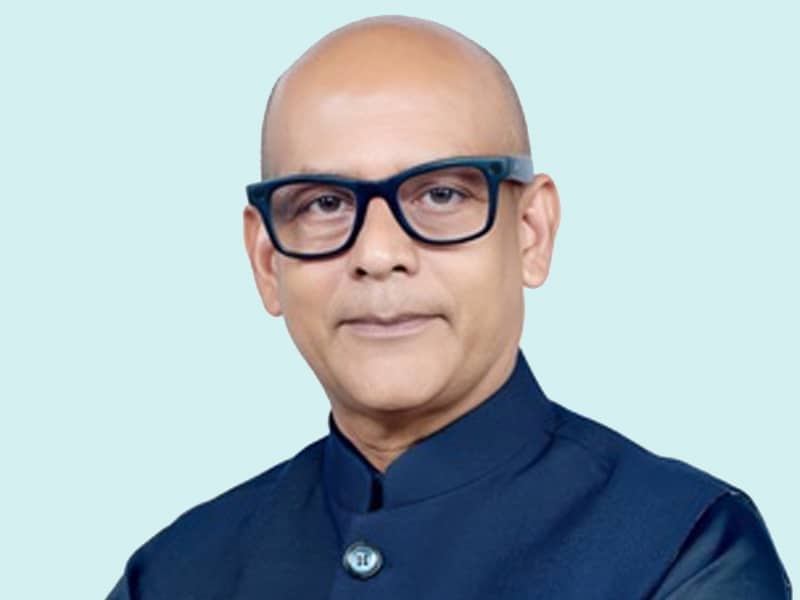
A. My journey was shaped by early learning challenges due to dyslexia, responding to which, I developed a strong visual and problem-solving mindset. Starting with small initiatives during school and later combining hands-on electronics experience with engineering, I learnt the importance of practical learning and experimentation. A final-year inverter project inspired by a real-world power problem eventually became the foundation of Hykon and grew through persistence, continuous learning, and long-term thinking. The principle that has consistently guided my approach to entrepreneurship is “Start small and think big”. I believe in validating products early, testing them in real market conditions, learning from small mistakes, understanding customer needs, and scaling gradually based on real feedback. This approach minimises risk, builds sustainable growth, and creates stronger long-term success.
Q. How did Hykon become a trusted Indian brand across rural and urban markets?
A. Hykon’s 35-year growth was driven by early entry into emerging technologies (rather than following markets), starting with inverters (1991), then uninterrupted power supply (UPS) systems, evacuated tube collector (ETC) solar water heaters, Lithium-ion batteries (~2006), electric vehicle (EV) three-wheelers and automobiles, and later battery energy storage system (BESS) and e-buses. A strong 170-member service network sustained trust, adaptability, and long-term brand value. Trust was built by solving real customer problems, especially Kerala’s power shortages, where uninterrupted electricity was a necessity. Early on, low competition helped with market acceptance. Rural markets relied on live demonstrations showing lights and fans running on battery power, enhancing credibility and word-of-mouth growth, while urban markets required different approaches. For unfamiliar product categories, traditional dealer networks are often ineffective, initially. Hykon focused on direct demonstrations, allowing customers to experience the product firsthand, which built trust and educated the market as to its value.
Q. How do you turn market needs into products, and balance in-house R&D with partnerships?
A. The approach is technology-driven, identifying opportunities through market signals, industry interactions, and ecosystem feedback. BESSs are a key example, where the rapid expansion of solar power has created grid instability, driving demand for energy storage. Advances in Lithium-ion batteries, lower costs, and supportive policies make this a scalable opportunity. The focus is on aligning real-world needs, technology maturity, cost viability, and policy support. High-growth, fast-evolving sectors offer strong scaling opportunities, especially for companies entering early. Success depends on identifying rising sectors and building products around internal capabilities with focused research and development (R&D) and execution. However, small and medium enterprises (SMEs) often struggle to retain skilled R&D talent, making the retention of long-term in-house expertise difficult. For SMEs, development is more practical than fundamental research. Since core technologies already exist, the focus should be on adapting, improving, and integrating them into market-ready solutions rather than building technologies from scratch.
Q. What is the expected growth trajectory of this segment, and how do you decide between in-house development and external partnerships?
A. We evaluate a segment’s growth potential by identifying large market shifts and selecting products aligned with those trends. Falling Lithium-ion battery costs, improved lifecycle performance, and possible government mandates for storage integration are expected to accelerate growth. The focus is on entering high-growth segments where even smaller companies can scale with relatively less effort. For development decisions, simpler products are usually developed in-house. Highly complex projects requiring specialised expertise, such as software, thermal dynamics, or advanced technologies, are outsourced to government agencies or external R&D partners. Since maintaining highly skilled teams can be difficult for SMEs, Hykon follows a hybrid model where external partners handle core development and internal teams focus on testing, industrialisation, and production-level improvements.
Q. How should SMEs balance R&D and innovation with limited resources?
A. SMEs should avoid investing heavily in pure research and instead focus on product development and practical innovation. Hykon differentiates between research and development, emphasising that development is more commercially viable for SMEs because it involves adapting existing technologies, modifying designs, and selecting the right components rather than creating entirely new technologies. A strong development-focused R&D team can help continuously improve products, while keeping costs manageable. At the same time, SMEs should prioritise sales and brand building alongside innovation. Manufacturing can often be outsourced, but a strong sales network and gradual brand creation are critical for long-term growth. Investments in R&D should ideally generate returns within one to two years, as product lifecycles are becoming shorter and continuous upgrades are necessary.
Q. How are artificial intelligence (AI) and value engineering improving your innovation and efficiency?
A. The focus is not on building proprietary AI platforms but on using existing AI tools to improve productivity and operations through communication systems, cloud platforms, automation, and tools like ChatGPT, enhancing efficiency and reducing manual effort. Alongside this, strong value engineering efforts continuously improve products, adding value through better performance, efficiency, optimisation, and cost reduction without increasing complexity or manufacturing costs.
Q. Can you discuss R&D, manufacturing strategy, automation, and your Kerala-based operations?
A. Our R&D team comprises ~25 members, including engineers, postgraduates, and experienced professionals with 15–20 years of expertise, ensuring continuity and domain depth. We are also building AI and automation capabilities through six-month engineering internship programs with hiring pathways. A dedicated six-member AI team focuses on integrating existing tools like cloud platforms, automation systems, and ChatGPT into workflows to improve communication, operations, speed, and productivity. R&D is driven by three pillars: product development, process innovation, and continuous value engineering for feature enhancement and cost optimisation. The company operates on a five-acre (about 20234 square metres) campus with a 55,000- square feet (equivalent to 5110 square metres) integrated factory-office facility, currently utilising only ~30% capacity, leaving strong expansion headroom. Around two acres (8094 square metres) are in active use, while three acres (around 12141 square metres) are reserved for phased growth over the next two years. Manufacturing automation is being introduced gradually to improve efficiency, streamline workflows, and increase output without proportionate manpower growth, creating a scalable and cost-efficient growth model.
Q. Which manufacturing decisions most improved scalability, quality, and profitability?
A. The core manufacturing principle is simplicity and scalability, with product design focused on easy and fast assembly to enable scale. For SMEs, especially in electronics, manufacturing relies more on modular execution than heavy infrastructure, with processes like printed circuit board (PCB) assembly and soldering outsourced to multiple vendors and products integrated in near-finished form. Testing remains a key differentiator and should be embedded in production for quality and consistency. Sustainable scale ultimately depends on products being easy to assemble, easy to test and aligned with strong market demand.
Q. How are you strengthening localisation and building resilient supply chains?
A. A significant share of critical components, especially Lithium-ion cells, is still imported from China due to India’s evolving manufacturing ecosystem, though localisation efforts are progressing. Long-term competitiveness requires not just design capability but scale, automation, and stronger industry–university–government collaboration for product innovation. The focus is on gradually reducing import dependence by expanding domestic manufacturing across electronics, energy, and mobility. We are also collaborating with the Centre for Development of Advanced Computing (C-DAC) on next-generation inverters and hybrid systems for megawatt-scale applications, targeting commercialisation within the next year. Building a resilient supply chain starts with strong logistics and standardised operating procedures across the value chain, from incoming quality checks to final dispatch. This must be supported by a total quality management (TQM) framework to ensure consistency and reduce variability. The supply chain should also extend beyond delivery to include installation, implementation, and after-sales service, creating an end-to-end customer support ecosystem.
Q. What can India learn from global manufacturing ecosystems?
A. One major lesson is the importance of strong collaboration between industry, academia, and government institutions. In countries like China, universities actively participate in developing technologies that industries can directly commercialise. Scale also becomes a major differentiator because larger production volumes reduce costs and improve competitiveness. India has strong talent and institutions, but deeper integration across these ecosystems will be important for building globally competitive manufacturing capabilities.
Q. What hiring and leadership practices drive innovation and growth in complex tech businesses?
A. The hiring strategy focuses on recruiting fresh graduates and training them extensively, prioritising attitude, adaptability, and willingness to learn over academic scores. Strong standard operating procedures (SOPs) and structured training enable even non-technical candidates to become productive in roles such as assembly, soldering, and testing. Workforce growth has also demonstrated the effectiveness of process-driven skill development. Another cornerstone is internal mobility, with a strong emphasis on promoting employees from within to build ownership and stability, complemented by selective senior-level lateral hiring to bring fresh perspectives and maintain innovation.
Q. As technology products become increasingly complex, how should chief experience officers (CXOs) in resource-constrained companies evolve their leadership approach?
A. As technology products become more complex, CXOs in resource-constrained companies need to move beyond purely managerial roles and develop strong product understanding. In SMEs, leaders cannot rely entirely on specialised teams because resources and expertise are often limited. CXOs should understand the product’s working principles, how it is designed and manufactured, and be capable of identifying and addressing technical challenges. They must also actively guide teams, understand problems at a deeper level and identify the right expertise when solutions require external support. According to Hykon’s approach, leadership in SMEs requires a blend of business and technical understanding, as depending solely on technical teams can restrict decision-making and slow growth. Larger organisations may have multiple experts and departmental structures, but SMEs require more hands-on and informed leadership from CXOs.
Q. How should CXOs prioritise investments across R&D, technology, manufacturing, sales, and branding?
A. Product cycles have shortened sharply, from 10–15 years in categories like water heaters and nearly a decade for UPS systems to just two to three years today. SMEs, therefore, cannot sustain long-gestation investments; R&D spending must generate commercially viable outcomes within 1–2 years. Success now depends on rapid execution, adaptability, and strong market alignment. SME priorities should remain practical, with R&D focused more on development than pure research, by adapting existing technologies into market-ready products through lean teams. Sales is the key growth driver, as even strong products cannot scale without market execution, while manufacturing can often be outsourced in electronics. Brand building should progress alongside sales through consistency and trust. Complex development is best handled through a hybrid ecosystem of external R&D partners, while core activities such as testing, industrialisation, and production optimisation remain in-house.
Q. How should companies align sales, distribution, and marketing for long-term growth, and measure true brand value?
A. Sales, distribution, and marketing should be aligned with how customers actually prefer to buy, rather than forcing a single go-to-market model. At Hykon, we follow three parallel models: channel sales through distributor and dealer networks, direct institutional sales for segments like UPS systems via corporates and government tenders, and project-based sales for customised, end-to-end solutions. The key is flexibility in approach based on customer behaviour. From a marketing perspective, the real measure of effectiveness is profitability and long-term financial sustainability, not just immediate sales spikes. We track this through a structured system of monthly reviews of sales, expenses, and overall profitability against annual budgets, ensuring disciplined financial control. For SMEs, marketing is a long-term investment that typically takes two to three years to build brand pull, but it must still support operational break-even within about two years. Ultimately, marketing investments are meaningful only if they contribute to consistent profitability and stable business growth. If sales increase but do not translate into financial stability over time, the strategy needs reassessment, because sustainable brand value is built on profitability, not just volume growth.
Q. How do government policies shape your long-term business strategy?
A. Government policies and incentives influence planning, but their impact on SMEs often differs from that of larger companies due to compliance complexity, delayed reimbursements, and working capital pressures. Experience in areas like solar water heaters and electric mobility shows that subsidy-driven models can create financial strain through delays and regulatory challenges. As a result, the approach is to avoid dependence on incentives and focus on products that remain commercially viable without policy support, ensuring long-term stability, resilience, and sustainable growth.
Q. What role will decentralised energy play in India’s future, and how will it grow?
A. The future of energy is shifting toward decentralisation, where homes and businesses become self-sufficient units by combining rooftop solar with local energy storage. We already operate close to this model through a 250kW solar installation that meets most operational needs, supported by stored energy for battery charging and testing, bringing us near a net-zero setup. Over time, wider adoption of localised generation and storage is expected to reduce dependence on centralised grids and create a more distributed, efficient, and resilient energy ecosystem.
Q. If you had to rebuild Hykon in the current market environment, what would you do differently?
A. If rebuilding Hykon today, the biggest change would be to follow a strict approach: start small, think big, validate early, solve real problems and let infrastructure follow demand, not assumptions. Instead of investing heavily upfront in capacity, infrastructure, or large teams, the focus would be on launching at minimal scale, testing the product in the market, and expanding only after confirming demand and profitability. This reduces risk and avoids the kind of large-scale losses that can happen when assumptions about demand don’t hold true. The experience shared also highlights that overinvestment in anticipation of growth, such as building large facilities or hiring heavily before demand exists, can lead to severe financial setbacks if business does not materialise as expected. Smaller, iterative expansion allows companies to correct mistakes early and scale sustainably as real market feedback comes in. Overall, the guiding principle would be to validate first, scale second, and always prioritise profitability and learning from the market over aggressive upfront expansion.
Q. What scaling mistakes do Indian tech firms make, and what advice would you give founders building lasting brands?
A. One common mistake is scaling too fast without market validation. Small flaws become major risks at large volumes. The right approach is to start small, gather customer feedback, refine the product, and scale gradually based on proven demand rather than assumptions.
From experience, overexpanding before validating demand can lead to overinvestment and underutilisation, as seen in ventures where capacity was built ahead of actual need, causing heavy losses. The lesson is clear: infrastructure should follow demand. Start lean, validate profitability, scale step by step, and prioritise disciplined execution over perception-driven growth. For young founders, success begins with defining a clear 5-year vision. Clear goals aligned across businesses and teams lead to focused execution. Long-term success comes from structured planning, consistent review, visualisation, and disciplined action—turning dreams into measurable outcomes.
Q. What qualities, capabilities, and business models will shape future Indian technology brands?
A. The next phase of technology will see rapid but uneven disruption. In the near term, AI will strongly transform software, consulting, recruitment, content creation, medical imaging, radiology, and diagnostics, while hands-on sectors like plumbing, electrical work, and factory operations will evolve more gradually through robotics and AI integration.
Successful technology brands will continuously track disruption cycles, identify sectors with sustained demand, and build adaptable business models aligned with policy and real-world needs. Long-term growth areas such as battery energy storage, electric mobility, UPS systems, and hybrid solar solutions remain strong due to their role in power reliability, industrial growth, and energy independence. The key capability will be turning long-term societal shifts into scalable, product-driven businesses.