With memory supplies tightening, device makers are raising prices, and Indian buyers are changing their habits. How is India bearing the brunt of the global memory crisis?
As the spotlight remains on the global AI race and who is winning with the highest number of data centres, another battle is quietly reshaping the global technology supply chain. Only a year ago, memory chips were just another component in our laptops or smartphones. Yet, by 2026, they have become one of the most talked-about resources in the industry.
Why?
Because they power AI infrastructure. But what does that have to do with consumer electronics? Let us consider an example.
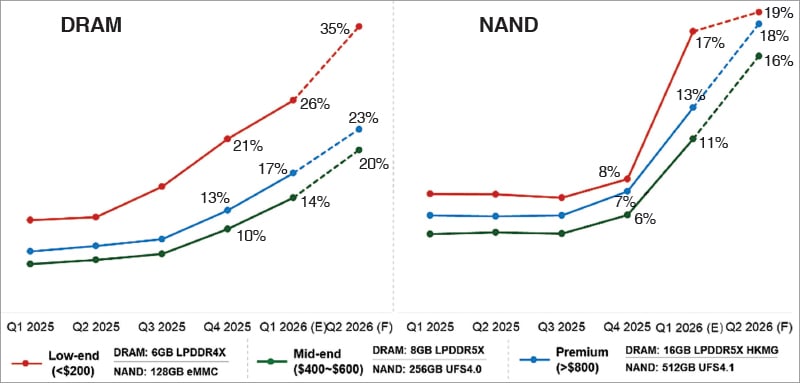
On 6th July 2026, it was reported that Samsung was set to increase the prices of its upcoming foldable smartphones. The Galaxy Z Fold8 Ultra and Flip8 will cost more than their predecessors, with the Flip8 priced about 13% higher in South Korea. This is due to the AI boom. Rising DRAM and NAND prices, driven by AI demand, have nearly quadrupled memory costs, making memory account for about 40% of the bill of materials of an $800 smartphone.
DRAM provides a device’s working memory, while NAND flash is used for storage. Both are essential not only in consumer electronics but also in AI servers that process increasingly complex workloads. As AI demand continues to rise, manufacturers are prioritising high-margin DRAM and NAND chips for servers, leaving consumer electronics makers competing for limited supplies. This shortage is now beginning to shape product pricing worldwide, with price increases filtering through the supply chain to manufacturers and consumers alike.
According to market research firm TrendForce, DRAM prices increased by as much as 98 per cent during the first quarter of 2026 and are expected to rise by another 58 to 63 per cent in the current quarter. As early as February 2026, Counterpoint Research estimated that memory prices had risen by approximately 80 to 90 per cent over the previous year, driven primarily by AI-related demand.
Now, India is not immune to this scenario. Industry experts say the country is already seeing the impact, particularly in the budget segment, with supply constraints expected to persist well into 2027.
Ajay Sharma, a veteran of India’s consumer electronics industry, believes the shortage is not caused by lower production but by a shift in allocation.
“Production has not reduced. It is being diverted towards AI infrastructure,” Sharma told EFY in an exclusive conversation.
“Manufacturers such as Samsung, SK Hynix, and Micron naturally prefer supplying higher-value AI servers because profitability is significantly higher than for smartphones or laptops. When production is limited, the category with higher margins and long-term contracts gets priority.”
Pressure reaches the Indian market