

The power can’t reach where it’s needed. Without better power lines, we lose many climate benefits even with more EVs and clean energy.
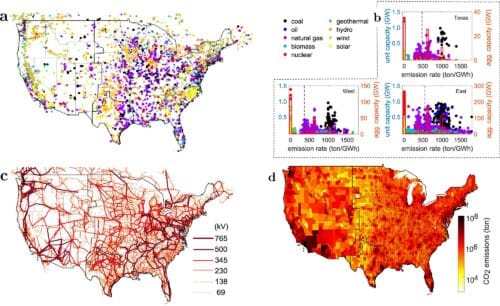
Upgrading the U.S. transmission grid is critical to unlocking the full climate benefits of electric vehicles (EVs), even if the country transitions completely away from gas-powered cars and has abundant renewable energy, a new study from Northwestern University finds. Without these upgrades, transmission bottlenecks would prevent clean electricity from reaching many EV charging stations, forcing greater reliance on nearby fossil fuel plants and undercutting emissions reductions.
The study shows that targeted improvements—such as adding or enhancing just 3 to 13% of the grid’s transmission capacity—could significantly reduce congestion. This would allow more renewable power, often generated in remote areas, to reach urban centers with high EV charging demand. Rather than requiring a full grid overhaul, researchers recommend focused upgrades in regions most affected by congestion and better interconnections between the Eastern, Western, and Texas grids.
Even when charging schedules are optimized to match peaks in renewable generation, the benefits depend on whether the electricity can be delivered to where it’s needed. In one simulation of a nationwide EV transition, nearly one-third of potential emissions reductions were lost due to current grid limitations.
The U.S. power grid operates like a highway system, moving electricity across long distances via high-voltage transmission lines. These connect to substations, which lower the voltage before distributing electricity to homes, businesses, and charging stations.

Using computer models that combined vehicle usage data and grid infrastructure, researchers analyzed different scenarios of EV adoption and renewable generation. Across all high-EV scenarios, congestion was a recurring challenge. Electricity demand rises sharply in cities as EV use grows, but most renewable sources—like wind and solar—are located in rural or remote regions.
The grid’s current design reflects its history: it grew from local networks where power was generated and consumed nearby. Today’s demand for clean, long-distance energy transmission calls for strategic upgrades to support an electrified future.