






How can networks double their reach while cutting fiber needs in half? An optical transceiver shows the way.
As mobile data grows and data centers spread across regions, we all feel the strain on today’s optical networks. If you run a 10Gb/s system, you have probably noticed it cannot meet demand. Moving to 100Gb/s systems might seem like the answer, but it is expensive and complex to manage. If you need to build or expand long-distance connections, especially between regional cities, laying new fiber is often not practical or affordable.
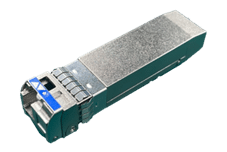
This is where NEC’s 25G SFP28 80km BiDi optical transceiver comes in. It lets us upgrade existing 10Gb/s systems to higher capacity without building new infrastructure. Because it supports bi-directional transmission over a single fiber, we cut fiber use in half and reduce deployment and maintenance costs.
The device extends reach to 80km, double the typical limit of conventional products, without extra relay equipment. The 30dB link budget combines a high-output laser with a sensitive receiver. This is useful in situations where fiber loss is high or only dark fiber is available, making it easier to build large-scale networks.
We also consider cost and power. Wavelength Division Multiplexing lets upstream and downstream signals share the same fiber, reducing the burden of construction and simplifying operations. Power use stays at 2.5W in industrial temperature conditions, about 20 percent lower than comparable solutions, and it can be installed in standard SFP ports, allowing integration with existing equipment.
If you need to balance speed, reach, and cost, NEC’s 25G SFP28 80km BiDi gives us a way to expand bandwidth and extend networks without the heavy investments usually required for long-distance transmission upgrades.


