


The advancement performs AI-grade tensor operations using light instead of electrons promising massive gains in speed and energy efficiency, and signaling a potential shift in how future AI hardware is built.
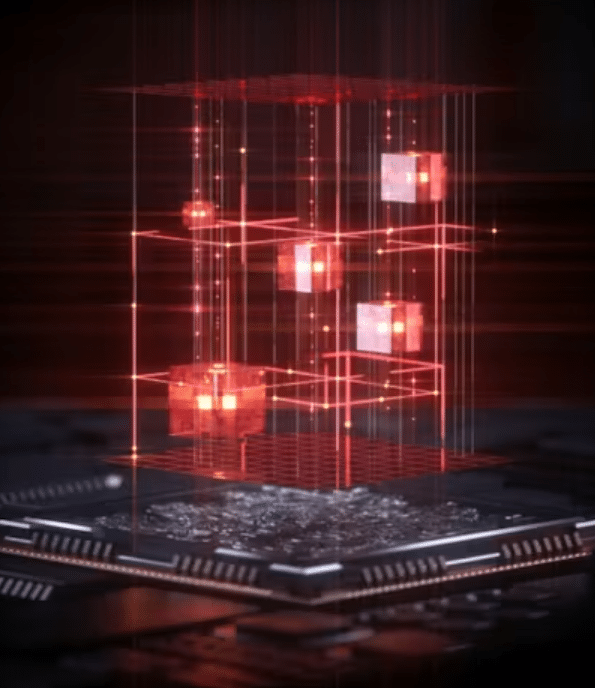
Researchers at Aalto University have unveiled a startling shift from electrons to photons in computing by performing AI-style tensor operations using beams of light, they claim to slash energy use and drastically boost speed. At the heart of the advancement is a photonic computing architecture that encodes data into both the amplitude and phase of light waves then uses the natural interference of those waves to carry out matrix and tensor multiplications in one embedded pass, rather than via conventional, sequential GPU-style circuits.
Lead author Yufeng Zhang describes it as merging many “machines” and “parcels” into a unified optical system: everything routes in parallel, instantly. The motivation is obvious: today’s mainstream AI workloads rely heavily on massively parallel electronic processors such as GPUs or neural accelerators, which remain bound by electrical resistance, heat dissipation, and switching delays. By contrast, photonic systems promise orders-of-magnitude improvements in both throughput and energy efficiency because photons travel at light-speed and don’t suffer the same resistive bottlenecks.
The team points out that their optical computing approach can, in principle, be implemented on “almost any optical platform.” And importantly, their work forecasts that within the next three to five years the technology could find its way onto photonic chips, enabling compact, low-power “light-AI” processors to tackle complex neural-network tasks. Of course, scale-up remains a challenge. Building full photonic-computing systems that integrate memory, data routing and reconfigurable tensor operations is non-trivial; translating lab demonstrations into robust, manufacturable chips will take engineering work. But the implications are far reaching:
If successful, this could mark a pivot away from the dominance of electronic GPUs in AI infrastructure opening up entirely new hardware paradigms. The team say they’ve cracked a way to “compute at the speed of light” for tensor operations, promising high-speed, high-efficiency AI hardware based on light waves rather than electrons. The next few years will tell whether that promise becomes a commercial reality.