






What skills should students focus on to build long-term careers in semiconductors? How are industry, government, and academia coming together to create opportunities for them? Answering these questions, Mr Siddharth Jain gives a peek into the roadmap that connects students today with the opportunities of tomorrow to EFY’s Vidushi Saxena.
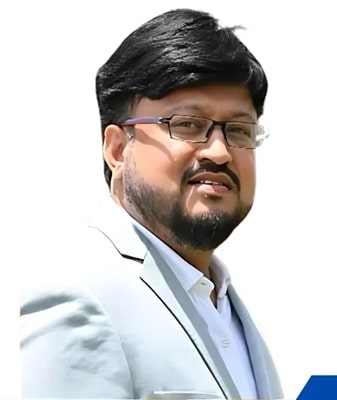
Q. Can you tell me about CG Semi and what it does?
A. We are a part of the Murugappa Group, which is itself an institution over a century old. The group has traditionally been involved in businesses such as engineering, mobility, fertilisers, and similar sectors. Now, in the new-age businesses, we are moving into areas like electric vehicles (EVs) and technology. This is where CG Semi comes in. It is a joint venture between three organisations: CG Power, Renesas, and Stars Microelectronics, who are also our technology partners. With the first round of allotments of India Semiconductor Mission (ISM) from the Prime Minister’s Office, five projects were approved, and this was one of them.
Q. Can you tell me more about the plants that you have opened recently?
A. We started this organisation in March 2024. Soon after, we brought key resources on board, including CXO-level leadership, and by August 2024, we had set up our Ahmedabad office, marking the beginning of our journey. We have two plants under development and approval. The first, Plant G1, is a pilot facility spread across approximately 1.8 acres (almost 0.728434 hectares), while the second, Plant G2, is a much larger facility covering around 28 acres (approximately 11.3312 hectares) in Sanand.
Within a year, we were able to achieve a major milestone, the inauguration of our first plant on 28th August, 2025, by the Honourable Chief Minister of Gujarat, Mr H.K. Patil Patel, along with Mr Ashwini Vaishnaw. This plant has now begun full-scale operations.
Q. How much manpower is being used there?
A. It is close to a couple of hundred people that we have on board. About 40% of them are expatriates, coming from across the globe, including Malaysia, the Philippines, South Korea, Europe, and the US. For the initial phase of the plant, we already have a fully-fledged staffing structure in place.
Q. Do you also have any partnerships?
A. Yes, we do. Currently, our joint venture partnerships include Stars Microelectronics and Reliance, both of which are also our key technology partners.
Q. Do you also do something for talent acquisition and innovation?
A. Absolutely. As our Prime Minister, Mr Modi has emphasised, there is an unwavering drive to shape a world-class ecosystem in India. When we began about a year ago, it was estimated that India would need around 90,000 people, including experienced professionals, lateral hires, and campus recruits.
In line with that, we brought in a batch of engineers from across India from the south, north, east, west, and central regions. We handpicked these individuals and sent them to overseas locations for training, where they gained exposure to the technology, machinery, and processes. They have now returned and are actively running operations at our plant.
They are further supported by technical experts from the domain, who provide mentoring and hands-on training, especially in handling delicate machinery and ensuring smooth operations.
Q. Are there any challenges that you face while recruiting engineers?
A. I would not call them challenges. I would say this is an exciting era for India. We often speak of Vasudhaiva Kutumbakam: ‘the world is one family.’ Bringing people from different locations, making them comfortable here in India, and ensuring their well-being so they can focus on their work has been an exciting journey.
Over the last six months, we have successfully brought in a good number of people, and they have all settled well in terms of food, culture, working patterns, and the overall ecosystem. With the strong support of both the government and our management, we have been able to establish this smoothly. We can proudly say that we are the first organisation to have our plant fully up and running.
Q. What plans do you have for India in the next 5 years? How are you going to grow the CG Semi?
A. I think the vision of our Prime Minister is to create a complete ecosystem that covers suppliers, industry, academia, and talent.
Focusing on the talent aspect, we are working in close partnership with the government under their guidance. Through industry and academia forums, we are shaping what kind of courses should be offered, what subjects need to be taught, and what type of practical labs are required. We are also collaborating with institutes to provide access to machines so that students can train on them directly.
In the second phase, this will extend to students across all levels, including engineering, diplomas, industrial training institutes (ITIs), and beyond. For them, the necessary machines and ecosystem are being put in place.
On the government side, a forum has already been established involving ISN, semiconductors, and industry and academia partnerships, and over the last six months, there has been significant progress and momentum in this direction.
Q. How will the students know about this through universities or through some programs that you are planning?
A. This is again a partnership between the government, industry, and academia. For example, through events like SEMICON, which is now in its fourth edition, you can see students coming from across the country. We even have PhD scholars who are studying overseas, attending these forums, alongside students from engineering, B.Tech, and M.Tech programmes.
These events give students the chance to understand what sectors are emerging, what skill sets are required, how they can secure employment, and where they should focus their learning. It allows them to see in real time where the opportunities lie.
Right now, IT has been a major sector in India. But through these initiatives, students can also explore new avenues of employment to build long-term careers.
Q. Do you think the government can do more for students or to make the ecosystem better?
A. I think we should give it some time. A lot has already been done, and more government announcements are expected soon, which will create visible traction on the ground. Significant progress is underway in infrastructure, new colleges, and various organisations within the ecosystem, alongside strong involvement from academia.
This is truly an exciting time. It is important to continue educating people about building this ecosystem, as it represents the next era of growth for Indian youth. The journey ahead is going to be exciting, with new investments coming across India and the creation of new opportunities. The more people become aware and educated, the stronger India will become.

