





A low-cost method to print liquid-metal circuits on heat-shrink films, enabling compact 3D electronics, adaptive antennas, and wearable sensors that conform to any surface from curved objects to the human body.
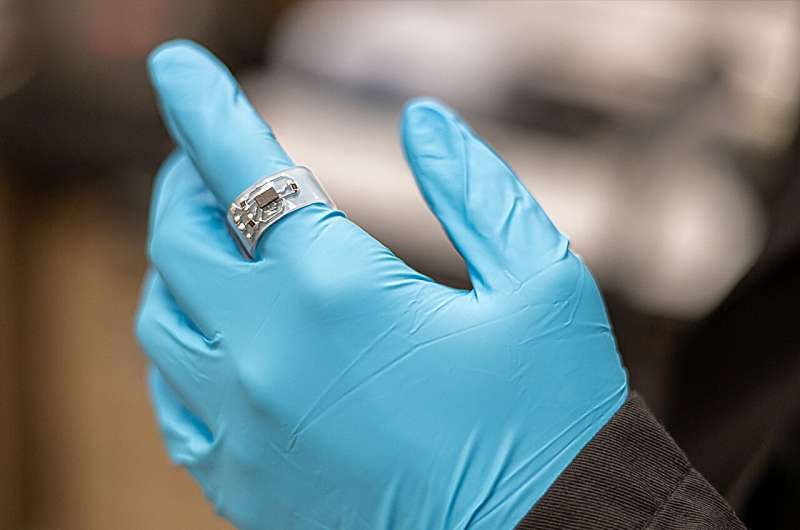
A team at Penn State has unveiled a clever and low-cost way to build wireless, internet-enabled electronics that can conform to complex 3D shapes like the human body or everyday objects. At the heart of their approach: printing circuits using liquid metal on cheap, heat-shrink polymer sheets (think “Shrinky Dinks” from childhood crafts). When heated, the substrate shrinks uniformly, transforming the printed pattern into a compact, three-dimensional structure.
The researchers had to tweak the raw liquid metal (an alloy of gallium and indium) so that it stayed conductive after shrinking and adhered well to the substrate. They used ultrasonication with a detergent-like compound to break the metal into smaller droplets and make it hydrophilic, plus plasma treatment on the polymer to help bond them.
Thanks to this modification, the circuits survive the shrinking process without breaking, and adhesion improves by about 20%. Then, using near-infrared light, the team can precisely control which parts of the sheet shrink letting them fold the material into desirable shapes and even create compact antennas.
As a proof of concept, they made a wearable ring with a tiny accelerometer that detected gesture-based motion and communicated data over a network. The idea: retrofit everyday objects (or bodies) with smart capabilities for instance, a recliner that monitors posture or a custom health-monitoring device that fits any body shape.
Because the substrate and processes are inexpensive and scalable, this method could democratize how we build “smart” devices. The team believes it could eventually power biomedical applications and home automation without needing complex, expensive fabrication. Looking ahead, the researchers plan to refine antenna designs and explore medical uses in collaboration with Penn State’s College of Medicine, aiming to build patient-specific, low-cost health monitors.
