Measuring RF power at high frequencies is tricky. What if one sensor could cover it all, cut test time, and simplify complex setups? Find out more.
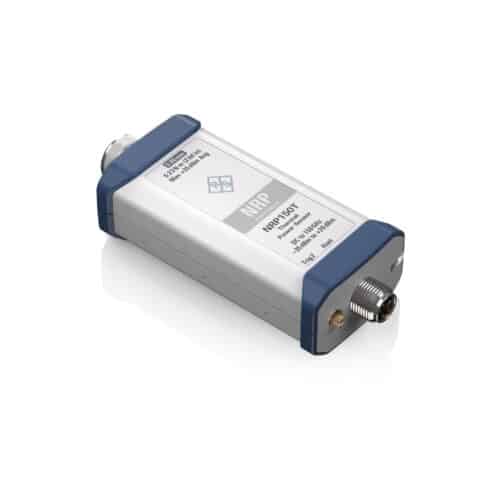
Measuring RF power above 100 GHz is difficult because many power sensors are limited by banded frequency ranges, connector limits, or measurement speed. Multiple sensors or repeated setups are often required to cover different bands, which increases test time and uncertainty. This affects teams working on automotive radar, high-frequency communication systems, and RF instrument calibration.
The R&S NRP150T thermal power sensor from Rohde & Schwarz addresses this by offering a single, continuous, non-banded frequency range up to 150 GHz. It uses a 0.80 mm coaxial RF connector and supports direct power measurements across the full range without changing sensors. This allows single-sweep measurements and reduces steps during validation and calibration.
This is relevant for ADAS and autonomous driving engineers. Automotive radar standards are being defined up to 148.5 GHz, including a new radar band. The company states that this thermal power sensor is the first RF power sensor to cover all automotive radar bands with one device. By extending coverage to 150 GHz, it supports power measurements for current and upcoming radar systems.
The same frequency coverage is needed in other applications. Engineers working on satellite communication, inter-satellite links, and radio astronomy can measure power up to 150 GHz without changing hardware. The sensor supports up to 500 measurements per second, which helps reduce validation and calibration time for vector network analyzers and other RF instruments in lab and production setups.
Key features of the R&S NRP150T thermal power sensor include:
- Dynamic range from −35 to +20 dBm
- Support for long-term operation
- Temperature compensation from 0 °C to +50 °C
- Low drift from external temperature effects
- Low response to out-of-band signals
- Maximum VSWR of 1.7
- Power transfer at very high frequencies
Integration into existing setups is simple. The sensor connects via USB and works with PCs, Android devices using a free app, or the R&S NRX base unit. It supports systems using 0.80 mm RF connectors up to 150 GHz and can be used for development, validation, and manufacturing.