By combining deep electronics engineering with point-of-care design, the system delivers fast, affordable diagnostics at the point of need—without bulky machines, complex infrastructure, or high upfront costs.
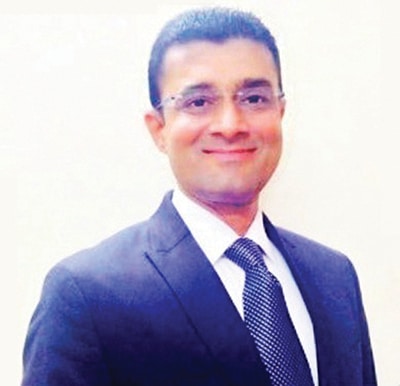
In 2015, Ashissh Raichura faced a personal crisis. His father required routine monitoring for vital signs such as blood pressure, heart rate, and temperature, and was later diagnosed with Alzheimer’s. The experience exposed a glaring gap in India’s diagnostic testing ecosystem, one that was expensive, fragmented, and largely inaccessible beyond urban centres.
From this challenge, Scanbo emerged. Formally incorporated in 2019, the company set out with a clear mission: to compress the capabilities of a full diagnostic laboratory into an affordable, portable point-of-care device that could function anywhere. As Raichura describes it, Scanbo was “born out of a deeply personal healthcare challenge and refined through years of hard engineering.”
Check the full, in-depth interview with Scanbo’s Ashissh, covering the technology, engineering challenges, and future roadmap.
The approach deliberately prioritises hardware over apps. While many healthcare solutions rely on external gadgets and inconsistent data streams, Scanbo developed the D8, a handheld device weighing under 100 grams, lighter than most smartphones. The device independently captures eight key diagnostics: electrocardiogram (ECG), respiration rate, heart rate variability (HRV), blood pressure, heart rate, blood oxygen saturation (SpO2), blood glucose, and body temperature. Together, these enable rapid screening, triage, and longitudinal monitoring.
The path to this level of integration was far from straightforward. Early prototypes were bulky and power-hungry, plagued by overheating sensors, signal interference, and wide variations in accuracy. The team iterated relentlessly, redesigning thousands of printed circuit boards, testing hundreds of sensors, and working closely with global suppliers.
The breakthrough came with a multilayer PCB architecture that isolated signals for ECG, SpO2, temperature, and electrochemical tests. Dedicated analogue front-ends, precise signal routing, gold and silver conductors, and microfluidic blood strips significantly reduced noise and signal drift, while eliminating the need for cold storage. Proprietary drying techniques and enzyme stabilisation ensure that consumables remain stable across conditions ranging from sub-zero cold to desert heat, enabling reliable use in remote and resource-constrained regions.
While hardware forms the foundation, Scanbo’s competitive edge lies in its AI layer. The D8 captures clean, high-resolution raw data, such as up to 100,000 data points per blood pressure reading, processed securely without reliance on cloud infrastructure. With more than 150 million real-world raw data points collected to date, the company has built one of India’s largest diagnostic datasets.
This dataset powers tools such as Hridaytaal, an AI-driven ECG analysis platform that improves diagnostic accuracy through continuous training and clinical validation. Scanbo operates a hybrid business model: devices are deployed to clinics and physicians at minimal upfront cost, while revenue is generated through proprietary consumables, per-test cloud services, and future AI-driven insights. Planned expansion from eight to 12, and eventually 19, diagnostic parameters positions consumables as a long-term growth engine.
Manufacturing and quality control are handled end to end at the company’s ISO CDSCO-approved, ISO 13485-certified, ESD-compliant facility in Surat. The site supports 100 per cent Made-in-India assembly, testing, and validation. While components are sourced globally, performance ownership remains firmly in-house. A private limited company with international entities supporting R&D and regulatory operations, Scanbo employs approximately 24 people across hardware engineering, AI, IT, quality, manufacturing, and assembly.
| Facts and Figures |
| • Reason for selection of name. Derived from “Scan Your Body,” the name was suggested by founder Ashissh Raichura’s wife, Hiral, after months of brainstorming, and was chosen for its simplicity and alignment with the company’s diagnostic mission. • City of HQ. Surat, Gujarat (manufacturing and core operations); operations and logistics leadership based in Chennai • Year of establishment. 2015 (concept and development); formally incorporated in 2019 • Nature of firm. Private Limited Company, with international entities supporting global operations, R&D, and regulatory expansion • Founders. Ashissh Raichura (Founder and CEO) and Arvind Rajan (Co-Founder, Operations and Logistics) • Current/last reported turnover. In the 10 million rupees range (exact figures not disclosed) • Total number of employees. Approximately 24 across hardware engineering, AI, IT, quality, manufacturing, and assembly |
Looking ahead, the company is targeting a scale of up to one million diagnostic tests per day by 2026, with a strong focus on markets in the United States, Africa, and Southeast Asia, guided by its “Made in India, built for the world” vision. Although Scanbo has already secured confirmed orders for thousands of devices, the primary challenge to rapid growth lies in scaling operations responsibly—an effort that requires Series A funding.
Unlike pure software ventures, healthcare innovation demands a far more complex foundation. Regulatory compliance, clinically validated accuracy and trust, scalable hardware manufacturing, and seamless data interoperability must all advance in parallel rather than sequentially. As the company prepares to expand, significant investment is required to scale manufacturing capacity, strengthen technology infrastructure and data centres, build robust customer support systems, and attract skilled talent. Limited access to growth capital and experienced resources remains the principal bottleneck to executing this expansion efficiently.
The strategy is to build this foundation correctly from day one, prioritising sustainable and compliant scale over rushed growth. For Scanbo, diagnostics are not the end goal but the starting point—laying the groundwork for an AI-led healthcare system that shifts medicine towards early detection and prevention, powered by disciplined innovation, thoughtful electronics design, and large-scale, high-quality data.