




Shrinking diagnostics into a pocket device, Scanbo’s Ashissh Raichura tells EFY’s Akanksha Sondhi Gaur how electrochemical sensing, PCBs and AI enable instant, affordable, point-of-care testing beyond hospitals worldwide access.
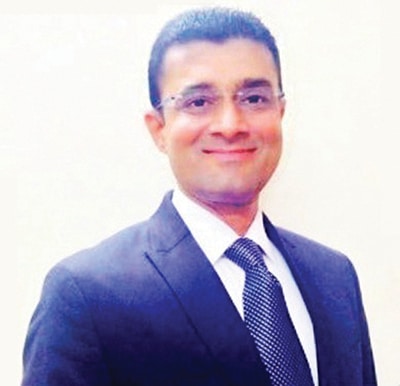
Q. What core problem did you set out to solve, and what personally motivated you to start Scanbo?
A. Healthcare has many challenges, but diagnostics is the foundation. I firmly believe that if diagnostics are done early and on time, healthcare can shift from being reactive to proactive. Unfortunately, diagnostics today are expensive, inaccessible, and often unavailable at the point of care, particularly in Tier-2, Tier-3, and Tier-4 cities. This mission is deeply personal. My father was diagnosed with Alzheimer’s, and when I looked back, I realised early diagnostic indicators had been missed. Since 2015, I have been singularly focused on making diagnostics affordable, point-of-care, and digitally connected. With enough diagnostic data and AI, healthcare can eventually move toward predictive models and even a digital health twin for individuals.
Q. Why the name Scanbo?
A. After months of searching, my wife suggested ‘Scanbo,’ short for ‘scan your body.’. The domain was available, and the name perfectly matched our mission.
Q. When was it founded, who are its founders, and how is the company structured today?
A. Our journey began with research in 2015, followed by the development of our first prototype in 2017. The company was formally incorporated in 2019. Today, ours is a privately held company headquartered in Canada, with its core operations and manufacturing activities based in Surat, India. The company has long-term plans to go public. I am the Founder and CEO, and my co-founder, Mr Arvind Rajan, is based in Chennai, where he supports operations and logistics. The team currently comprises approximately 24 employees across hardware design, embedded firmware, software development, quality, assembly, and operations. All product assembly and quality testing are carried out in-house in India, giving us tight control over manufacturing and performance standards.
Q. What gap in diagnostics convinced you to build the startup, and how did the mission evolve over time?
A. We started with basic vital blood pressure, heart rate, and temperature with digital records. Over time, we realised diagnostics should not require a lab visit for every test. Patients in smaller cities travel long distances, lose wages, and spend heavily on even routine tests, such as complete blood count (CBC)complete blood count (). We shifted to point-of-care diagnostics, bringing testing directly to clinics, outpatient departments (OPDs), inpatient departments (IPDs), and community health workers. Since vitals are linked to non-communicable diseases, our roadmap expanded from vitals to blood diagnostics, moving from D8 to D19.

Q. From an electronics and systems-design perspective, what was the core breakthrough?
A. The breakthrough was system-level integration. Instead of isolated modules, we built a single electronics architecture capable of handling electrical, optical, thermal, and electrochemical signals together. This required innovation in multilayer printed-circuit board (PCB) design, sensor isolation, power management, and signal routing, enabling eight diagnostics inside a 100-gram device.
Q. From an electronics perspective, what was the toughest challenge you faced?
A. Miniaturisation. In 2015, wearable-grade medical sensors did notexist. We tested over 128 temperature sensors and destroyed more than 1000 SpO₂ sensors during R&D. Maintaining clinical accuracy while shrinking the device required thousands of PCB iterations.
Q. Can you describe the electronics architecture of Scanbo D8?
A. Scanbo D8 integrates eight diagnostic parameters into a single rechargeable handheld device built around a globally recognised SoC capable of wireless connectivity, sensor fusion, and parallel processing. Its multilayer PCB enables sensor isolation, noise-free routing, stable analogue front-end performance, and high-resolution data capture. High-conductivity materials like gold and silver are selectively used to ensure signal integrity. The eight parameters are electrocardiogram (ECG), respiration rate, heart rate variability (HRV), blood pressure, heart rate, blood oxygen saturation (SpO₂), blood glucose, and body temperature, which are key physiological parameters used to continuously monitor and assess an individual’s cardiovascular, metabolic, and overall health status.
Q. Most point-of-care devices focus on one test at a time. How did you support eight parameters?
A. Each sensing modality, like ECG, SpO₂, temperature, blood pressure, and electrochemical blood analysis, is treated as an independent subsystem on isolated PCB layers with controlled grounding and routing, preventing cross-interference while enabling synchronised capture.
Q. How critical was PCB design in achieving clinical-grade accuracy?
A. PCB design is the heart of our company. Our proprietary multilayer architecture with controlled impedance and isolation has gone through thousands of iterations. This depth of refinement is extremely hard to replicate.
Q. How do you prevent interference between electrical, optical, thermal, and chemical sensing subsystems?
A. Each domain operates on isolated PCB layers with dedicated shielding and grounding strategies. Electrochemical sensing, central to blood diagnostics, is precisely controlled and electrically isolated.
Q. How do you manage signal noise, drift, and accuracy?
A. A single blood pressure measurement captures nearly 100,000 raw data points. Noise filtering is handled through strong electromagnetic compatibility (EMC) design, optimised analogue front-ends, and PCB architecture. AI is applied later for interpretation, not basic noise removal.
Q. What role does embedded firmware play in your firm?
A. Firmware continuously monitors battery health, sensor degradation, calibration drift, and anomalies. This self-diagnostic capability ensures proactive maintenance and accuracy even in global medical devices.
Q. Bio-signal acquisition is sensitive to noise and motion. How is reliability ensured?
A. Through multilayer PCB design, high-quality biosensor interfaces, high-resolution data capture, and proprietary filtering and calibration algorithms delivering accuracy comparable to gold-standard devices.
Q. What were the major challenges in developing blood-test strips?
A. Cold-chain independence was critical. Our strips work reliably from –20°C to 50°C. We use enzyme-based electrochemical detection with proprietary drying methods. Where enzymes are notviable, we are developing aptamers that deliver results in under five minutes.
Q. What enables your blood diagnostics without bulky analysers?
A. Electrochemical sensing combined with proprietary microfluidic strips. Precise electronic measurement of chemical reactions enables lab-grade accuracy at the point of care.
Q. Where does AI fit into a startup’s architecture, device or cloud?
A. Currently, AI runs on cloud-based graphics processing unit (GPU) infrastructure. We are actively working toward edge AI for future on-device inference.
Q. Can you explain your ECG AI engine, Hridaytal?
A. Hridaytal is our Central Drugs Standard Control Organisation (CDSCO)-approved AI engine detecting tachycardia, bradycardia, sinus arrhythmia, and atrial fibrillation. Trained on over 250,000 ECG records, accuracy has improved from 87% to 94%. Future versions will include MI and ventricular abnormality detection.
Q. How do you validate accuracy across demographics?
A. We conduct studies across India, the US, Canada, and Africa, benchmarking against FDA-approved devices and mercury BP instruments.
Q. How does your massive dataset strengthen electronics and algorithms?
A. With over 150 million diagnostic data points, we continuously refine sensor calibration, noise models, and algorithm accuracy, directly influencing hardware upgrades.
Q. Where are devices manufactured?
A. All assembly, testing, and packaging are done in-house at our International Organisation for Standardisation (ISO) 13485 and electrostatic discharge (ESD)-certified facility in Surat. We haveinvested nearly ₹5 million in testing and calibration infrastructure.
Q. What hurdlessemerge at scale?
A. Consistency across PCB yield, component sourcing, calibration repeatability, and automated testing is central to delivering reliable performance, which is why manufacturing capacity and automation are being expanded to ensure uniformity at scale. The biggest challenge is scaling responsibly while managing regulation, manufacturing, and clinical validation in parallel. Unlike pure software startups, healthcare innovation demands rigorous regulatory compliance, clinically validated accuracy and trust, scalable hardware manufacturing, and seamless data interoperability. The focus is on building this foundation correctly from day one, ensuring that growth is sustainable, compliant, and credible rather than rushed.
Q. What are your scaling plans?
A. We currently assemble 5000 devices per month and aim for 100,000 annually. We plan a 20,000–25,000 sq ft (about 1858.06-2322.57 square metres) facility with in-house strip manufacturing, targeting a million diagnostic tests per day by end-2026.
Q: Your’s is a technology innovation or a business model innovation?
A: Both. Technologically, we integrate multiple diagnostics into one device. Commercially, we eliminate CapEx and OpEx by offering devices at near-zero upfront cost, with per-test usage, consumables, and AI services.
Q. What makes Scanbo difficult to replicate?
A. Hardware can be copied. Our advantage lies in scale, data, and continuous iteration, thousands of PCB revisions and millions of diagnostics. We arealso building a layer-1 blockchain protocol to secure healthcare data.
Q. What are the startup’s three biggest technical USPs?
A. The startup’s three biggest technical USPs are, first, a single ultra-compact device capable of delivering multi-parameter diagnostics. Second, it has a proprietary multilayer PCB and electrochemical sensing architecture that enables accurate, reliable measurements. Third, it has built one of the world’s largest real-world diagnostic datasets, strengthening validation and long-term performance.
Q. How does the roadmap evolve from D8 to D19?
A. More biomarkers, higher compute, advanced sensing requiring improved power management, processors, and PCB architectures.
Q. How do you see Scanbo and electronics reshaping diagnostics by 2030?
A. By 2030, diagnostics will be decentralised, intelligent, and data-driven, powered by advances in sensors, edge computing, AI accelerators, and secure digital infrastructure that bring testing closer to patients. Scanbo aims to lead this shift by delivering 19-20 diagnostic parameters through a single handheld deviceat less than half the cost of traditional labs. The result will be instant, transparent diagnostics accessible even in villages, guided by Scanbo’s core mission of the three As: availability, affordability, and accessibility.


