





Wireless still forces tough choices between speed, power, and delay. A new approach shows how fast data, low delay, and long battery life can work together.
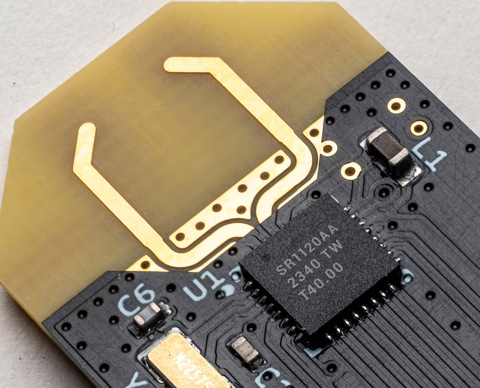
Many developers struggle to move large amounts of data wirelessly without draining batteries or adding delay. Bluetooth and 2.4 GHz radios often fall short when systems need high data rates, fast response, and reliable links in crowded environments. This is a common problem for engineers building gaming peripherals, edge AI devices, audio systems, and industrial or medical equipment.

The ultra-wideband transceiver is designed for teams that need fast data transfer with very low power use. It delivers up to 40.96 Mbps, about 40 times higher throughput than Bluetooth, while using roughly 25 times less power and cutting latency by about 60 times. This helps battery-powered devices send more data, respond faster, and run longer on a single charge.
Interference is another challenge in dense wireless environments. The transceiver operates in freely licensed spectrum from 6.2 to 9.5 GHz, which reduces congestion compared with 2.4 GHz bands. It also supports multi-antenna setups, helping systems stay reliable in industrial sites, robotics platforms, and busy consumer spaces.
For teams that also need distance measurement, the transceiver combines data communication with ranging. Many UWB solutions focus mainly on positioning and consume significant power. The transceiver offers similar ranging performance at about 100 times lower power, using a simpler and more cost-focused design. It also extends range by around 50% compared to the earlier SR1020.
These capabilities target developers building next-generation devices where data volume keeps increasing. This includes edge AI systems processing sensor data, wireless audio products that need low delay, and IoT devices used in factories, hospitals, and robots. Looking ahead, body area networks and implantable medical devices will require wireless links that can move neural and sensor data in real time. The transceiver is positioned for engineers preparing for those demands.
“Every engineer knows the pain of compromise with wireless transceivers — you get the speed but burn through power, or you save power but your latency suffers,” said Fares Mubarak, CEO, SPARK Microsystems.


