Robots waste power and depend on control to move. A joint design shifts control into the structure, helping robots walk and grip objects using less power.
Robots waste energy, need large motors, and depend on software to move. This limits their use in walking machines, robotic hands, assistive devices, and human-like robots. Engineers at Harvard have developed a joint design that reduces the need for motors and control software by letting the robot structure handle more of the work.
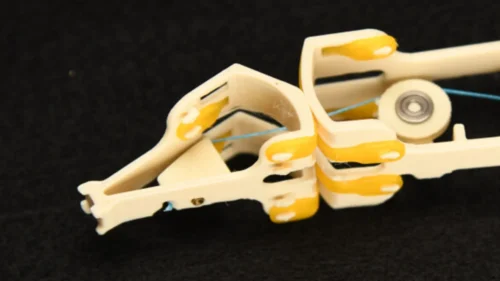
The approach copies how the human knee works. Instead of using round joints, it uses curved surfaces that roll and slide against each other. These rolling contact joints are shaped based on the forces and tasks the robot must handle. This guides energy use, allowing robots to move using smaller actuators and simpler control systems.
For robot designers, this means they can plan where force should act and build that into the joint shape. As a result, energy is delivered only where needed, reducing losses and improving motion control. This shifts much of the work from software into mechanical design, allowing control systems to focus on higher-level tasks.
The method grew from work on soft robotic grippers, which must wrap around objects while applying force. By combining rigid parts with flexible links, the team created joints that behave like human bones and cartilage. In testing, a knee-like joint built using this approach corrected alignment errors by 99 percent compared to standard joints.
A two-finger robotic gripper using the same joint design lifted more than three times the weight of a gripper using circular joints and pulleys, with the same motor input. This shows how mechanical design can improve performance without increasing power or control needs.
Unlike rolling joints that rely on circular shapes, this method designs surfaces matched to motion paths and force needs. Mathematical models define the movement and force, which are then translated into joint shapes for tasks such as walking, jumping, or gripping.
This design method can help engineers building humanoid robots, exoskeletons, assistive devices, and robotic hands. By letting structure handle motion, it improves efficiency, strength, and control, bringing robots closer to human movement while reducing hardware and software demands.