





Connected vehicle and infrastructure systems aim to cut congestion, fuel waste and idle emissions during rush hour.
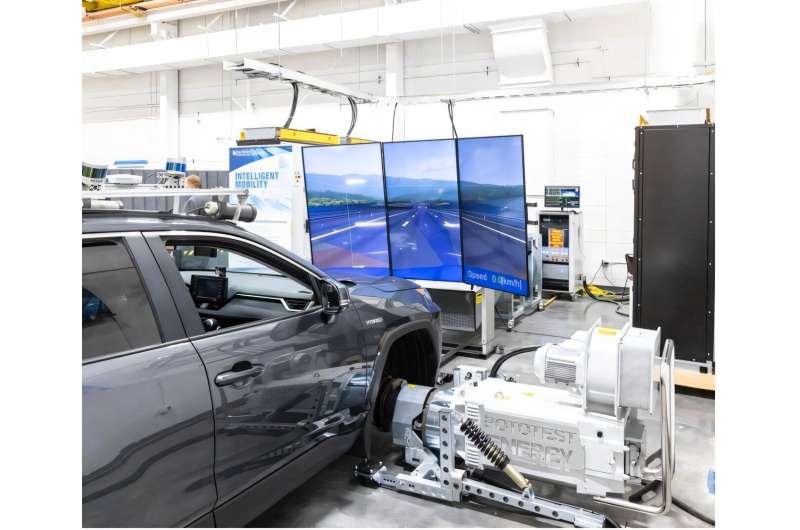
Researchers in the U.S. Department of Energy (DOE) and partner labs are exploring how advanced vehicle automation and infrastructure electronics can drastically reduce rush-hour congestion and energy waste on roadways. The work focuses on cooperative driving automation (CDA), a tech stack that integrates vehicle sensors, communications systems and traffic control electronics to better coordinate traffic flow.
At the core of the effort is the Connected and Automated Vehicle Environment (CAVE) lab at Oak Ridge National Laboratory (ORNL), where engineers embed real vehicles into a virtual traffic environment to test next-gen driving algorithms. Paired with a hardware-in-the-loop platform called Real-Sim XIL, the setup links real vehicle electronics and sensors to simulated infrastructure and digital-twin traffic scenarios. This lets teams model how connected vehicles interact with one another and with traffic signal systems.
Unlike most autonomous driving work that focuses strictly on onboard vehicle autonomy, the DOE project blends vehicle hardware and infrastructure electronics. Intelligent traffic signals and roadside units communicate with connected cars to smooth traffic merging and reduce the unpredictable stop-and-go behavior caused by human drivers. That coordination can cut wasted fuel and idle time while improving throughput on busy corridors.
Four national labs contributed to the initiative: ORNL worked on cooperative merging algorithms; Argonne National Laboratory developed car-following behavior models; Lawrence Berkeley National Laboratory bridged digital twin simulations with real-world testing; and the National Laboratory of the Rockies built a scalable cellular vehicle-to-everything co-simulation framework to evaluate communications performance and energy impacts.
The integrated system aims to showcase how distributed sensing, real-time communications and adaptive control electronics can reduce bottlenecks at merges and intersections traditionally the biggest contributors to rush-hour delays. Such connected automation schemes could lower fuel use and emissions by reducing idle time and smoothing traffic waves, raising the possibility of smarter, greener transport systems.
The collaboration earned the DOE’s Vehicle Technologies Office Team Award for Outstanding Collaboration, highlighting the value of cross-laboratory integration in advancing intelligent transport electronics research. While full deployment of CDA remains a future vision, this work underscores how vehicle and infrastructure electronics together can reimagine urban mobility.

