





Enhanced thermal control and precision alignment address growing complexity in advanced PCB repair and rework applications.
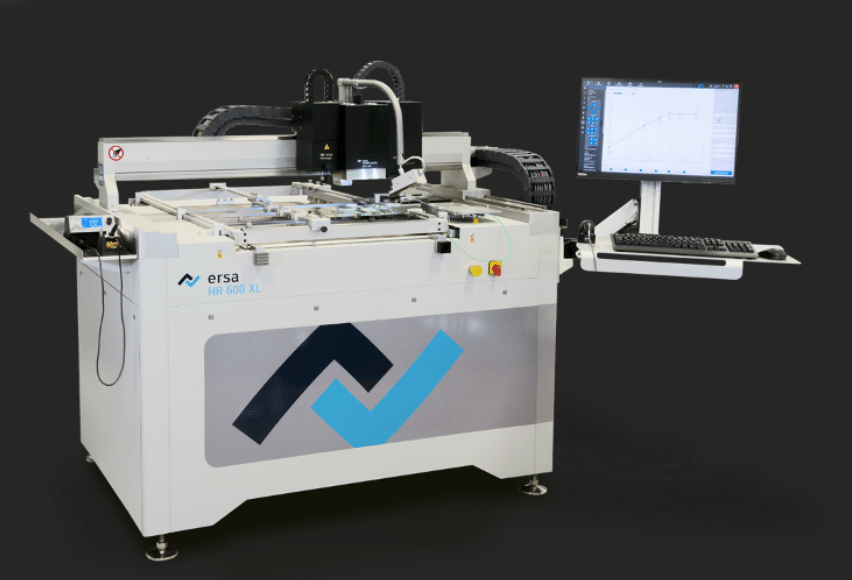
As board designs grow in size and component density, rework processes are under increasing pressure to deliver precision without compromising throughput. A new XL-format rework system by Kurtz Ersa was introduced to address exactly that challengebringing expanded heating capability and refined process control to complex assemblies.

The key features are:
- Newly designed high-performance heating head for large-format PCBs
- Closed-loop thermal control for stable, repeatable profiles
- Vision-assisted alignment for precise component placement
- Optimized bottom-side heating for multilayer and high-mass boards
- Programmable process management for standardized rework operations
The system is engineered for large-format PCBs and densely populated boards common in industrial, automotive, and high-reliability electronics. At its core is a newly developed heating head designed to provide uniform thermal distribution across extended board areas. This supports safe and controlled removal and replacement of components such as BGAs, QFNs, and large connectors, even on thermally demanding multilayer boards.
Thermal precision is managed through closed-loop control, ensuring stable temperature profiles during both desoldering and soldering cycles. The platform integrates vision-assisted alignment to support accurate component placement, minimizing the risk of misalignment on fine-pitch and high-I/O packages.
Beyond hardware enhancements, the system emphasizes repeatability. Intelligent process control enables operators to define and store profiles, helping standardize rework procedures across shifts and production lines. This is increasingly important as manufacturers seek traceable, documented repair processes that align with quality and compliance requirements.
The expanded working area and robust bottom-side heating make the system suitable for oversized boards that exceed the capabilities of conventional rework platforms. At the same time, controlled ramp rates and optimized heat delivery help protect sensitive components and reduce the likelihood of warpage.
As electronics assemblies continue to scale in complexitydriven by higher functionality and tighter layoutsrework technology is evolving from a manual repair function into a precision-driven process step. This latest XL system reflects that shift, positioning rework as a controlled, data-supported operation rather than a last-resort fix.


