




New IC architecture challenges complex resonant designs by simplifying high-power conversion, boosting efficiency, and reducing system cost.
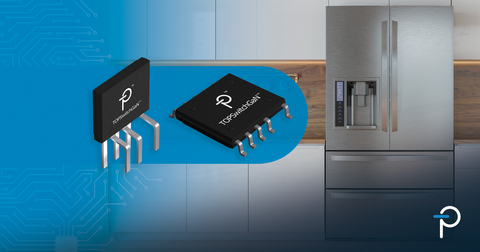
A long-standing limitation in power supply design is being redrawn, as flyback converters—traditionally confined to lower power ranges—are now scaling into territory once dominated by more complex resonant topologies. The latest integrated circuits from Power Integrations extend flyback capability to 440 W, enabling engineers to rethink architectural choices for high-performance applications.
The key features are:
- Extends flyback topology up to 440 W output
- Integrated 800 V GaN switches for lower losses and higher efficiency
- Up to ~92% efficiency across 10–100% load range
- <50 mW standby power, meeting strict energy regulations
- High-frequency operation (up to 150 kHz), enabling smaller magnetics
At the core of this shift is the integration of gallium nitride (GaN) switching with established offline switcher architectures. By combining high-voltage GaN devices with proven controller designs, the new approach significantly increases power density while maintaining a simpler circuit structure. This effectively removes the need to transition to LLC or other resonant designs as power requirements increase.
The result is a notable reduction in design complexity, component count, and overall system cost. In many implementations, thermal efficiency gains are strong enough to eliminate heat sinks, further simplifying hardware and improving manufacturability. Engineers can now deploy a single design methodology across a much wider power range—from tens of watts up to several hundred watts—cutting development time and easing scalability.
Efficiency also remains a key highlight. The platform delivers around 92% efficiency across a broad load range, while meeting stringent standby power requirements below 50 mW. This ensures compliance with energy regulations without requiring additional circuitry such as synchronous rectification.
From an applications perspective, the expanded flyback range opens opportunities in appliances, industrial systems, and charging solutions such as e-bikes—segments that previously leaned on more complex and costly power architectures. Ultimately, this development signals a broader industry trend: simplifying power electronics without sacrificing performance. By pushing flyback topology beyond its historical limits, designers gain a more efficient and flexible path to high-power conversion.


