New memristor survives 700°C extremes
A newly developed electronic memory chip capable of operating at extreme temperatures above 700°C marks a major breakthrough in next-generation electronics, potentially enabling computing in environments previously considered impossible.
Researchers have demonstrated a nanoscale memristor device that reliably stores data at temperatures hotter than molten lava, maintaining stability for over 50 hours without refresh and enduring more than a billion switching cycles. The device operates at low voltage (around 1.5V) with nanosecond speeds, significantly outperforming existing high-temperature memory technologies.
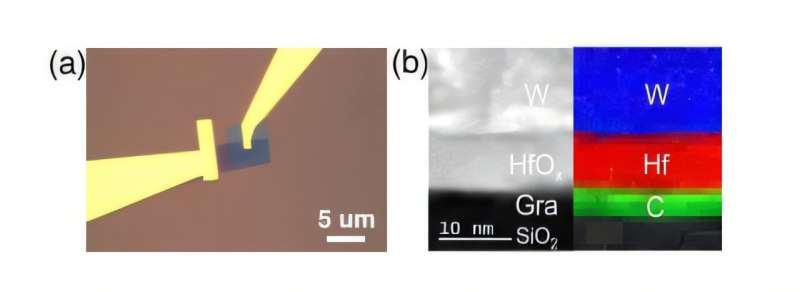
The innovation centers on a layered structure using tungsten, hafnium oxide, and graphene. This material combination prevents thermal degradation—a common failure point in conventional silicon-based memory—by stopping metal atom migration that typically causes short circuits at high heat.
Unlike traditional chips that fail at a few hundred degrees Celsius, this design shows no operational limit within tested conditions, suggesting even higher temperature tolerance may be achievable.
Beyond durability, the chip introduces significant implications for artificial intelligence hardware. As a memristor, it can perform in-memory computing, enabling matrix multiplication—the core operation in AI workloads—directly through electrical behavior rather than sequential digital processing. This could drastically reduce energy consumption and improve computational speed.
The technology opens doors to applications in extreme environments such as space exploration, where electronics must survive Venus-like surface temperatures, as well as in geothermal drilling, nuclear systems, and high-performance automotive electronics.
Despite the promise, commercialization remains distant. Current prototypes are lab-scale, and integrating high-temperature logic circuits alongside memory will be essential for practical deployment.
Still, the development represents a foundational step toward electronics that can function reliably in some of the harshest conditions known, potentially reshaping the future of computing hardware.