


This brain-inspired AI chip signals a shift toward energy efficient computing by using unconventional hardware to process complex data tasks.
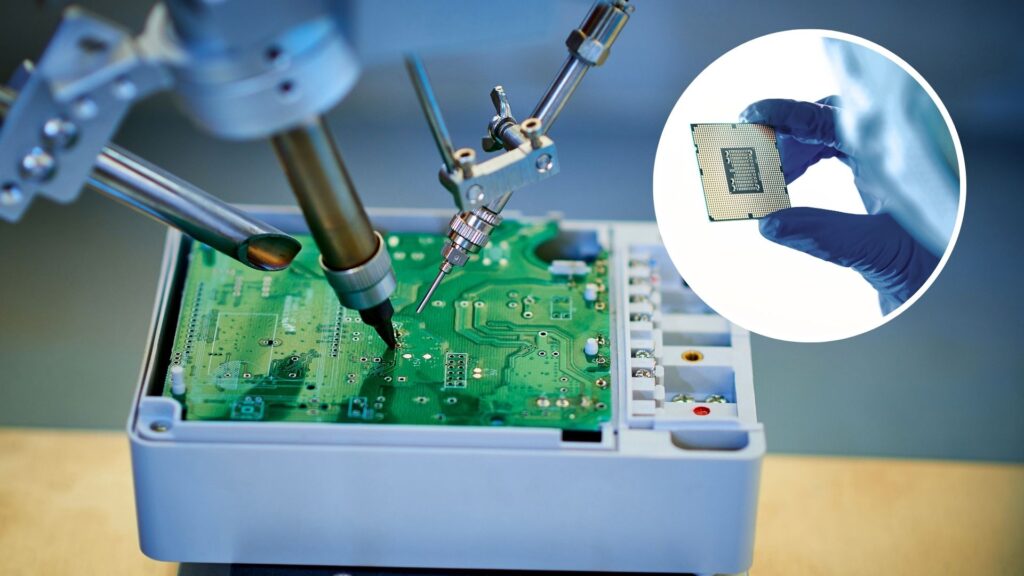
Researchers in the United Kingdom have developed a novel brain-inspired computer chip that could significantly improve the energy efficiency of certain artificial intelligence (AI) systems. Created by physicists at Loughborough University, the device processes time-dependent data directly in hardware, avoiding the need for conventional software-driven computation.

This innovative approach falls under neuromorphic engineering, where computing systems are designed to mimic the structure and function of the human brain. Instead of relying on traditional architectures, the chip uses physical processes to perform computations, offering a fundamentally different way of handling AI workloads. According to the researchers, this method can deliver up to 2,000 times greater energy efficiency in specific tasks, although results vary depending on application.
At the core of the technology is a thin-film memristor made from niobium oxide. The device features random nanopores that create complex internal structures, enabling it to function as a “physical reservoir” for computation. This setup allows the chip to naturally process temporal signals, data that evolves over time, making it particularly suitable for tasks like time series prediction and pattern recognition.
To demonstrate its capabilities, the team tested the chip using a range of computational problems. These included performing XOR logic operations, recognizing simple pixelated images, and predicting patterns in the Lorenz-63 system, a well-known chaotic model associated with the butterfly effect. By feeding voltage signals into the device and analyzing the resulting electrical outputs, the researchers successfully achieved accurate predictions and data reconstruction.

The system works by combining the memristor’s physical processing with a simple linear model that interprets its outputs. This hybrid approach allows complex computations to be performed with minimal energy consumption.
The researchers believe their work highlights the potential for scalable, energy-efficient AI hardware. By leveraging naturally occurring physical dynamics instead of relying solely on software, this technology could pave the way for next-generation neuromorphic systems capable of handling real-world, time-based data more efficiently.