

A tiny wireless surgical robot that combines five functions in one platform, potentially enabling precise minimally invasive procedures, targeted drug delivery, and tissue sampling.
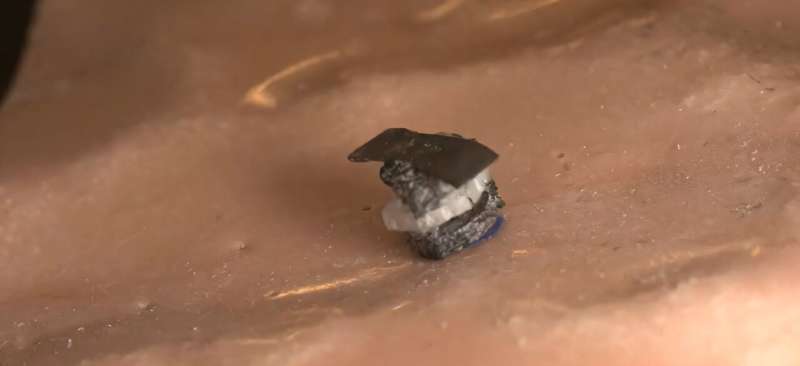
Researchers at Nanyang Technological University (NTU), Singapore, have developed a seed-sized surgical robot capable of performing five different medical functions within a single miniature platform. The development could strengthen the future of minimally invasive surgery by reducing the need for multiple instruments during medical procedures.
Measuring approximately 4.4 mm in length, the robot is controlled wirelessly through weak magnetic fields and can rapidly switch between different operating modes in less than a second. The miniature system can move across soft and uneven biological surfaces while carrying out surgical actions with a compact architecture.
Unlike traditional robotic surgical systems that often require separate tools for specific tasks, the new platform integrates five functions into a single device. The robot can cut tissue, release drugs at targeted locations, grip objects, collect and store tissue samples, and generate localized heat remotely when required. The multi-function design aims to simplify procedures while reducing complexity within constrained surgical spaces.
The development addresses a persistent challenge in minimally invasive medicine: delivering multiple surgical capabilities through extremely small systems without increasing procedural burden. Existing robotic surgery platforms typically rely on larger robotic arms or interchangeable instruments, which can increase setup complexity and operational requirements.

Researchers indicated that the miniature robot can navigate soft tissue environments, an important capability because internal body structures often present irregular and dynamic surfaces that make movement difficult for micro-scale devices. By combining locomotion and functional tools into a single architecture, the system could reduce the need for repeated insertion and removal of instruments during procedures.
Potential applications include targeted drug delivery, biopsy collection, localized treatment procedures, and precision surgeries in confined areas of the body. Such systems could also support emerging trends in robotic-assisted healthcare, where miniaturization, wireless control, and higher surgical precision are becoming increasingly important.
While the technology remains at the research stage, the demonstration highlights a broader shift toward compact robotic systems designed to bring advanced functionality into increasingly smaller medical devices.