






The world’s first commercial nuclear-powered satellite has launched to test a power system that generates electricity without sunlight, supporting long-duration space missions.
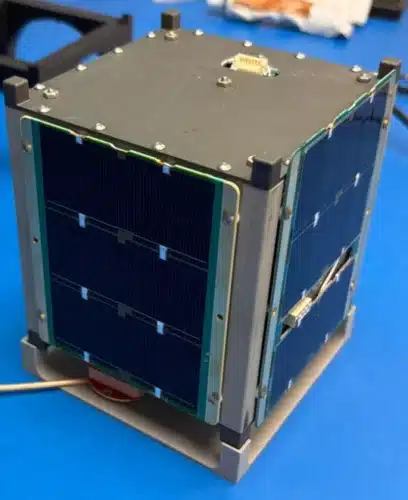
City Labs has launched its BOHR (Betavoltaic Orbital High-Reliability) satellite aboard SpaceX’s Transporter-17 rideshare mission. The company says BOHR is the world’s first commercial nuclear-powered satellite and the first CubeSat powered by nuclear technology, marking a new milestone for small satellites.
The mission will demonstrate the company’s NanoTritium betavoltaic technology, which converts energy from the natural radioactive decay of tritium directly into electricity using a semiconductor. Unlike conventional solar-powered satellites, the system can provide continuous electrical power without depending on sunlight.
BOHR is designed to validate the technology as a dedicated power source for spacecraft payloads. The satellite uses conventional solar panels to operate its main bus systems, while the NanoTritium™ system powers the demonstration payload.
According to the company, the technology is intended for long-duration missions where reliable power is needed for many years with minimal degradation. It could support spacecraft operating in deep space, permanently shadowed lunar craters, and autonomous sensor networks where solar panels are ineffective or battery life is limited.
The company said the technology could also support future missions under NASA’s Artemis program and other commercial missions beyond low Earth orbit that require continuous power independent of sunlight.
BOHR also marks the first commercial nuclear space mission to complete the U.S. Federal Aviation Administration (FAA) approval process for launching nuclear material under the National Security Presidential Memorandum-20 framework. The launch safety analysis was prepared by City Labs and independently reviewed by Sandia National Laboratories. The FAA granted payload authorization for the mission on September 30, 2025.
City Labs said its tritium-based power systems operate at very low radiation levels and are designed for safe handling, transportation, and integration with standard commercial launch vehicles.
Click here for the original announcement.

