Can an electric aircraft move heavy cargo over water without runways? A developing seaglider combines ground-effect aerodynamics with coastal logistics.
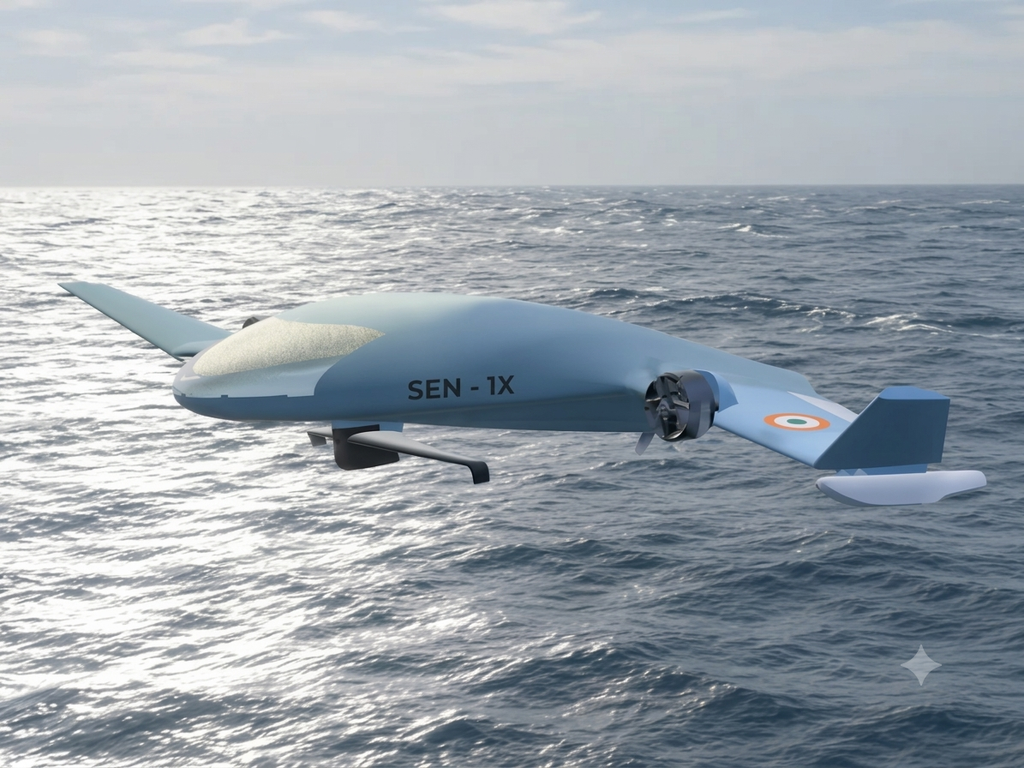
Waterfly Technologies is developing SEN-1X, an electric wing-in-ground-effect (WIG) aircraft designed for coastal logistics, cargo transport and surveillance. The aircraft uses ground effect to generate additional lift and reduce aerodynamic drag while flying close to the water surface, offering a potential alternative for moving cargo across coastal routes.
Unlike conventional aircraft, SEN-1X is designed to cruise around 2–5 metres above water. At this height, the interaction between its wings and the water surface helps generate additional lift. This operating principle could enable faster marine transport without requiring conventional runways for take-off and landing.
According to specifications reported by IDRW, SEN-1X is being designed for a payload of up to four tonnes, a top speed of 250 knots (approximately 463km/h) and a range of around 1,500km. These are reported design specifications, not demonstrated flight performance.
For electronics and aerospace manufacturers, the platform presents potential requirements across electric propulsion, power management, navigation, flight control and onboard monitoring systems. Its intended operation close to water also makes the integration of reliable electronics for marine environments an important engineering consideration. These are relevant technology areas for such a platform, rather than confirmed specifications of SEN-1X.

Waterfly envisages applications in cargo delivery, medical transport, coastal patrol and surveillance. The ability to operate from water could help logistics operators reach coastal locations where conventional aviation infrastructure is limited. The company also identifies defence logistics as a potential application for transporting personnel, equipment and supplies.
SEN-1X’s progress will depend on translating its proposed speed, payload and range into demonstrated performance, alongside the engineering and operational requirements of electric flight over water.