




A teardown reveals how a metering chip, a wireless controller and a relay turn an ordinary socket into an energy-monitoring device.
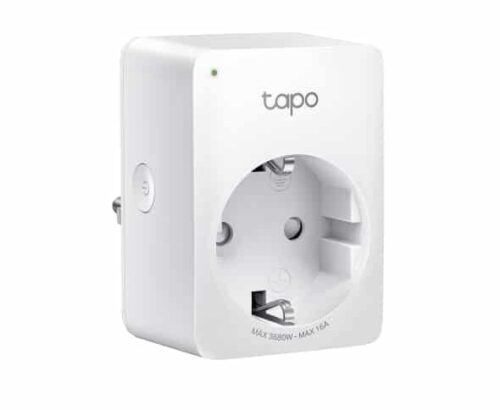
A smart plug can do more than switch an appliance on and off. It can measure electricity consumption, record energy use over time and estimate running costs. A teardown of the Tapo P110M from TP-Link reveals the electronics behind these functions, including a dedicated energy-metering chip, a wireless microcontroller, external flash memory and a mechanical relay.
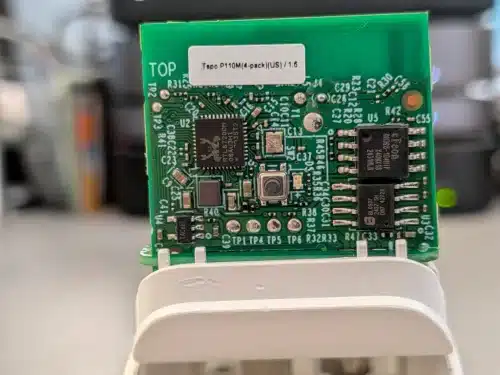
Electronics engineer Brian Dipert examined the device for EDN on 12 October 2026. The teardown identified a Shanghai Belling BL0937 energy-metering integrated circuit (IC), a Realtek RTL8720CM wireless chip, Eon Silicon EN25Q32B flash memory and a Churod relay. The smart plug also supports Matter, a connectivity standard designed to improve compatibility between smart-home devices and supported platforms.
The BL0937 is responsible for measuring electrical parameters. It monitors voltage and current and provides measurement outputs that allow the controller to determine power consumption. The Realtek chip manages the device’s operation and wireless communication, sending consumption data to the Tapo application. The external flash memory stores firmware and other persistent data, while the relay switches power to the connected appliance.
Separating these functions allows the plug to combine electrical measurement, remote switching and wireless connectivity in a compact enclosure. The metering IC handles the measurement process, while the wireless controller manages the device’s other functions.
The BL0937 is particularly important because determining energy consumption involves more than detecting whether an appliance is switched on. Voltage and current measurements help establish how much electrical power a connected device draws. Accumulating energy consumption over time provides a reading in kilowatt-hours (kWh), the unit commonly used for electricity billing.
TP-Link’s application displays energy consumption and lets users enter their electricity tariff to estimate running costs. This can help households understand how much energy individual appliances consume. However, the resulting cost is an estimate based on recorded consumption and the tariff entered by the user, not a replacement for the electricity utility’s meter.
The teardown also highlights a hardware difference between the P110M and the earlier Tapo P115. According to Dipert, the P115 uses a RISC-V-based processor with integrated memory, whereas the P110M uses an Arm-based Realtek controller alongside separate flash memory. The difference illustrates how two products with similar consumer-facing functions can use different internal architectures.
Dipert suggests that the change could be related to the maturity of the suppliers’ Matter software implementations. This is an interpretation of the hardware difference, however, rather than a confirmed explanation from TP-Link. One five-lead component marked TACeE1 also remained unidentified in the teardown.
The P110M is a commercial product, but its electrical ratings vary by region. TP-Link specifies a maximum load of 15 amperes and 1,800 watts for the US version, while the European version is rated for up to 16 amperes and 3,680 watts for general or resistive loads. These ratings are not interchangeable, and the motor-load limits differ from the general-load ratings.
For Indian households, appliance-level energy monitoring could help identify which devices contribute most to electricity consumption. Electricity bills commonly express consumption in units, with one unit equivalent to one kilowatt-hour. Measuring individual appliances can provide more detailed information than a household electricity meter alone.
However, the teardown concerns a specific regional model. Its socket compatibility, electrical rating and availability in India should be confirmed before recommending it to Indian consumers. A plug’s maximum current rating also does not automatically make it suitable for every high-power appliance. The connected equipment, socket and plug must all be appropriately rated.
The teardown demonstrates how dedicated metering electronics and a wireless controller can bring energy monitoring to an ordinary socket. For electronics engineers and enthusiasts, it also offers an example of how measurement, embedded processing, switching and smart-home connectivity are combined in a consumer device.
For more information, click here.
