An India-based startup is turning thermoelectric technology into a portable, personal cooling system, delivering real-time body-temperature control through wearable devices—no air-conditioners, no large infrastructure, just efficient cooling designed around the human body.
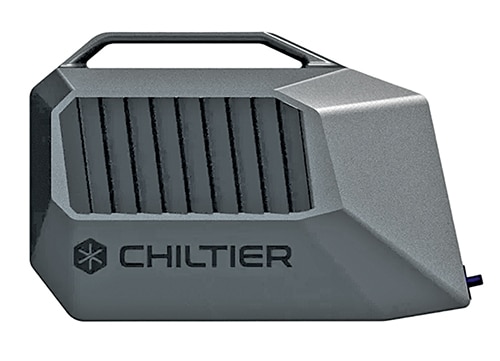
Think of entering an environment of intense heat without relying on a huge air-conditioner, but on something that cools you down through a personal cooling device. The Delhi-based startup Chiltier is built around this premise—a personal cooling system worn by the user rather than cooling the atmosphere around them.
Established in 2024, the company is incorporated as an LLP in Delhi and aims to transition into a private limited company. The key people behind the startup include CEO Kulpreet Sahni, Eve Sahani, and Avjeet Sahani, with expertise in technology, finance, and operations, respectively.
The name combines the word ‘chilling’ with Peltier technology, reflecting the venture’s core concept. While conventional cooling systems cool spaces, this one takes a different approach by cooling people rather than rooms. The technology has the potential to create a new category of personal cooling solutions that could improve comfort, energy efficiency, and productivity on a global scale. However, the innovation did not emerge out of thin air. It was shaped by real-world experience. The founder’s background in the oil and gas industry, including work aboard ships, highlighted how excessive heat can directly affect productivity and physical well-being.
The technology uses thermoelectric cooling (the Peltier effect) to circulate temperature-controlled water through wearable devices such as jackets and mattresses. The innovation has already earned industry recognition. Chiltier was honoured at the EFY Innovators’ Awards 2026 for creating the ‘ThermoPod: Portable Thermoelectric System’. Turning the concept into reality presented several engineering challenges. The primary challenge was making Peltier cooling systems efficient, portable, and capable of operating in high-temperature environments, as such systems have traditionally been considered inefficient. The solution involved developing a microclimate-controlled ThermoPod, separating hot and cold zones, and implementing an efficient heat-dissipation system.

Most development work is carried out in-house, supported by a broader engineering network. This provides access to a resource pool of approximately 60 engineers, while a core team of eight to nine people focuses directly on product development. Nevertheless, the core intellectual property (IP) and system architecture were developed internally.

The design incorporates Peltier elements, control boards, temperature sensors, battery packs, pumps, and a liquid-flow circuit. The cooling fluid is primarily water mixed with additives that improve conductivity and longevity. Smart power management helps balance energy consumption between peak and sustained operating loads. Despite extensive optimisation efforts, battery technology remains a major bottleneck and is expected to undergo significant improvements in the coming years.
The startup follows a global-first, direct-to-consumer (D2C) model, leveraging crowdfunding platforms, based on early findings suggesting that most high-intent customers are located in overseas markets.
In addition to its D2C strategy, the company may selectively pursue B2B collaborations in sectors such as healthcare, defence, and hospitality. Although it is not currently seeking conventional distributors, it remains open to working with channel partners that offer strong digital reach, global presence, or community influence.
The product went on sale on 17th April, following its crowdfunding launch and marking the transition from pre-launch to market entry. Although deliveries are expected to begin in June-July, early traction has been encouraging, with thousands of high-intent consumers registering interest. This suggests positive revenue potential during the initial growth phase. The startup is currently self-funded by the founder but expects to pursue external funding once meaningful revenue traction has been achieved.
The manufacturing process is outsourced through contract manufacturing arrangements, aligning with the company’s asset-light strategy. Rather than investing heavily in infrastructure and machinery, the company has partnered with manufacturers capable of handling PCB fabrication, assembly, and turnkey production. Key challenges include scaling at speed, maintaining optimal performance in harsh environments, and enhancing user experience in real-world conditions. Battery limitations and supply-chain constraints also remain areas of focus.