What if a battery could warn you about problems before they become serious? A new battery management system can detect damage, track aging, and spot faults early.
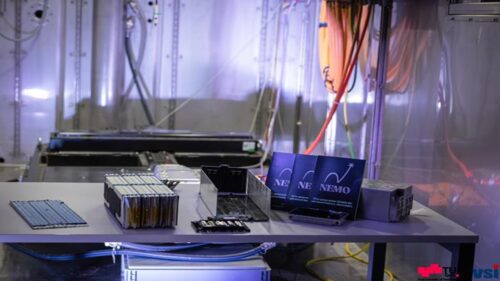
Researchers in Austria have developed a battery management system (BMS) that can detect internal battery damage and monitor aging in electric vehicle batteries, helping improve safety, performance, and service life.
The technology was developed through the EU-funded Nemo project by researchers at Graz University of Technology, Vrije Universiteit Brussel, and industry partners. Unlike conventional battery management systems that mainly track voltage, current, and temperature, the new system provides information about conditions inside battery cells.
Current battery management systems typically estimate battery health using external measurements and calculations. This can make it difficult to detect internal damage or aging in individual cells until battery performance begins to decline.
The new system uses models and algorithms to identify faults, track cell degradation, and determine when maintenance may be required.
A key focus of the project was improving the detection of battery safety risks. To develop the system, researchers intentionally damaged battery cells under laboratory conditions. Some cells were mechanically deformed to simulate impacts that can occur during vehicle use. Data collected from these tests was then used to train algorithms capable of identifying similar damage patterns in operating batteries.
The system is based on electrochemical impedance spectroscopy (EIS), a sensor-based method that measures electrical resistance within battery cells. This enables monitoring of internal battery conditions rather than relying only on external measurements.
According to the researchers, the additional monitoring capability can help identify damaged cells earlier, allowing corrective action before faults develop into safety issues.
While conventional battery health assessments mainly indicate how much capacity has been lost over time, the new approach provides an understanding of the physical and electrochemical changes occurring inside cells as they age. This information can be used to optimize battery operation, improve performance, extend service life, and enhance safety.
Researchers say the battery management system can be integrated without significantly increasing the size or weight of existing systems. A demonstrator has already been built at the battery-module level, and a follow-up project is planned to move the technology toward commercial deployment.