




Artificial neurons that mimic real brain cells using ion-based signals instead of electrons—promising ultra-efficient, compact chips that could bring artificial general intelligence closer to reality.
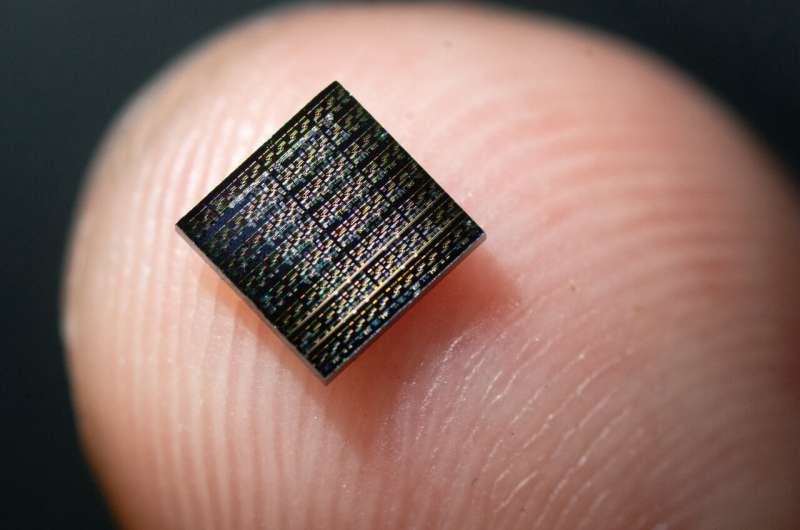
In an advancement that could reshape the future of artificial intelligence, researchers at the University of Southern California (USC) have created artificial neurons that closely replicate the electrochemical behavior of biological brain cells—offering a pathway toward smaller, faster, and far more energy-efficient computer chips.
The study from USC’s Viterbi School of Engineering and School of Advanced Computing introduces a new neuron design built using a “diffusive memristor.” Unlike conventional processors that rely on electrons to process information, these neurons use ions—charged atoms—to trigger electrical signals, much like the human brain.
The new design drastically reduces chip footprint and power needs. Each neuron occupies space equivalent to a single transistor—compared to tens or hundreds in current designs—potentially cutting chip size and energy use by orders of magnitude. This innovation could pave the way toward artificial general intelligence (AGI) and brain-like learning systems that process and adapt with remarkable efficiency.
Led by Professor Joshua Yang, director of USC’s Center of Excellence on Neuromorphic Computing, the team built the artificial neurons by stacking a diffusive memristor and a resistor on top of a transistor. The device uses silver ions in oxide to emulate the neuron’s natural signaling, producing electrical pulses that mirror biological computation for tasks like movement, learning, and planning.
The team explains that ions offer a more faithful model of brain behavior than electrons: “The brain learns by moving ions across membranes—achieving energy-efficient, adaptive learning directly in hardware.” The result is a system that mimics human intelligence while consuming a fraction of the energy used by modern AI systems, which currently require megawatts to process large datasets.
While silver isn’t ideal for large-scale semiconductor manufacturing, the researchers are exploring alternative materials to enable scalable production. With this advance, the team has built the foundation for chips that could one day learn and reason like the human brain—bringing computing closer than ever to natural intelligence.


