Track waves and stabilize motion using a single compact sensor that delivers real time vertical and rotational data.
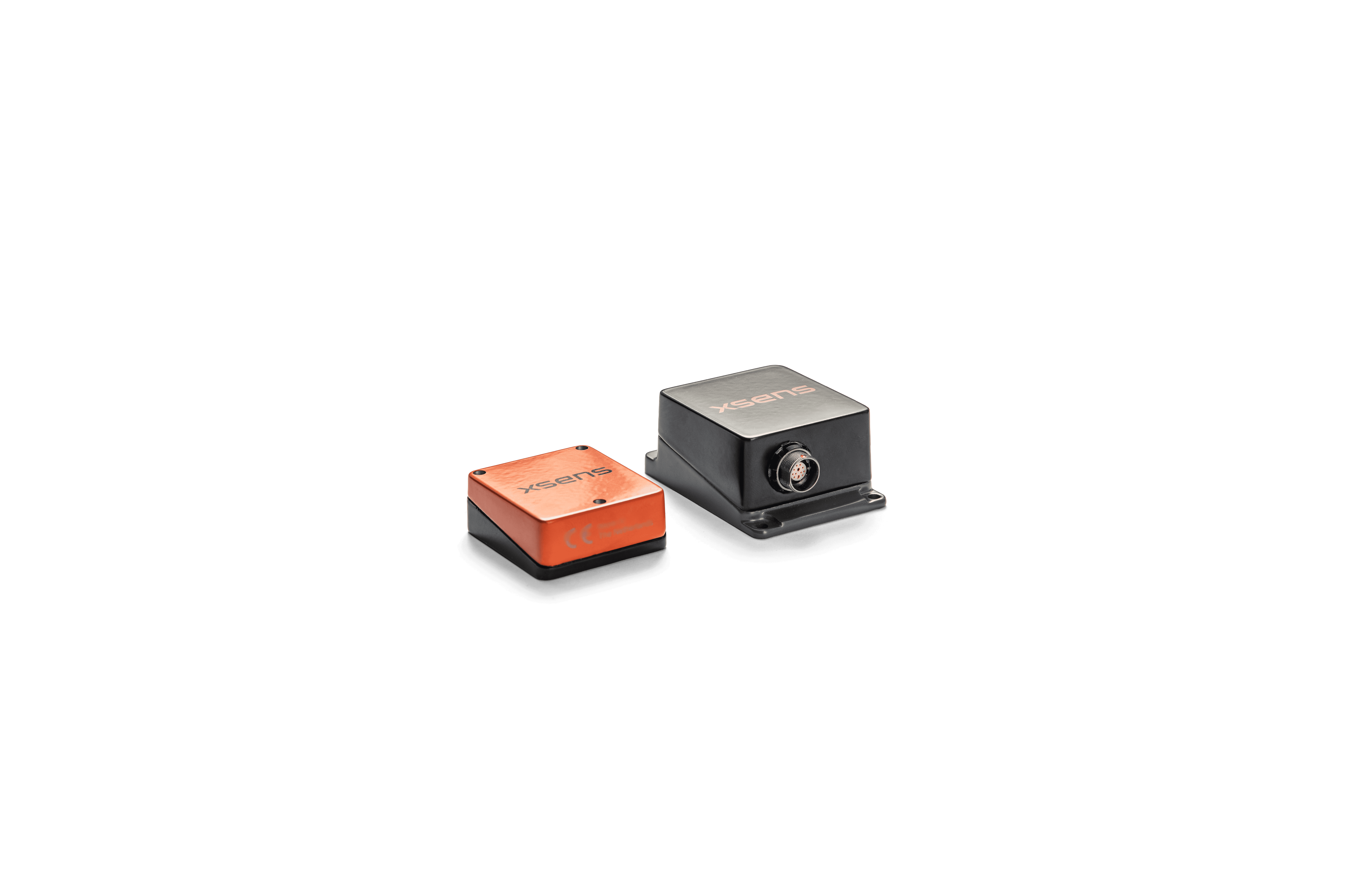
Marine engineers often struggle to track vertical motion accurately in real time without relying on large, complex systems. Xsens addresses this with a new Heave measurement feature for its Sirius and Avior IMUs, enabling centimeter-level vertical displacement measurement for wave compensation and stabilization. The feature delivers roll, pitch, yaw, and Heave from a single compact sensor, eliminating the need for external processing units or tactical-grade systems while still meeting the accuracy requirements of offshore platforms, vessels, docking systems, marine robots, buoys, and survey equipment.
Heave data runs at up to 100 Hz, supporting active control systems that must respond quickly to wave motion. The algorithm reduces long-term drift using phase correction and bias estimation and allows users to set offset points like the Center of Rotation (COR) and Point of Interest (POI), so measurements reflect true vessel or payload motion even when the sensor is mounted away from the point of interest. Accuracy is better than 5 cm for wave periods up to 29 seconds and around 6 cm for periods up to 40 seconds, covering most marine conditions.
The feature is available via a firmware update for existing units or pre-enabled on new units. Heave can be activated through MT Manager software or the Xsens SDK. Xsens Avior is a compact OEM module for embedded designs, while Sirius is a standalone MRU in a rugged IP68 enclosure, compliant with MIL-STD-202. Both support RS-422, CAN, and UART interfaces. Development kits and free SDKs for C/C++, Python, ROS1, ROS2, and MATLAB are available. Units are CE, FCC, and RoHS compliant and ITAR-free.
“Engineers now get vertical displacement data directly onboard, alongside roll, pitch, and yaw,” said Ayush Sharma, Algorithms Engineer at Movella. “This gives marine customers the complete motion reference they need for stabilization and compensation systems, without the size or certification overhead of tactical MRUs.”