A cooling technology could change how EVs and AI systems manage heat by simplifying manufacturing, reducing leaks, and moving closer to commercial use.
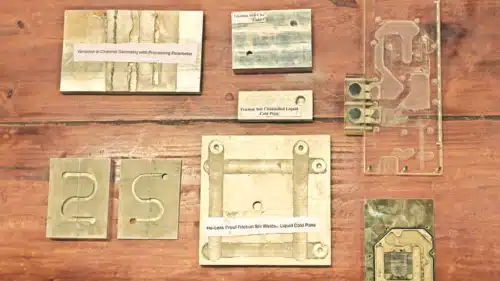
A research team at the Indian Institute of Technology Gandhinagar has developed a cooling technology that could simplify the production of liquid cold plates used in electric vehicles, AI data centres, trains, and electronic systems. The manufacturing process is designed to reduce leaks, lower production complexity, and improve the reliability of thermal management components.
The project, called Advanced Chill Tech, introduces a manufacturing method for liquid cold plates, which remove heat from batteries, processors, power electronics, and other devices. The process is intended to make these components easier to manufacture at scale while reducing defects.
The technology has reached Technology Readiness Level (TRL) 7, with prototypes validated in an operational environment. A joint patent application has been filed with Epsilon Engineering Pvt. Ltd.. The largest prototype has withstood pressures above 35 bar and passed fatigue and tensile tests.
Liquid cold plates are metal components with internal channels that allow coolant to flow through them and remove heat. They are used in EV battery packs, AI data centres, railway power electronics, aerospace, defence systems, and other applications where temperature control is required.
Most liquid cold plates are manufactured using brazing, in which several metal parts are joined together. This process can result in defects or leaks, leading to rejected components. Because the plates contain multiple joints, leaks can create electrical and thermal safety risks. India also depends on imported technology due to limited domestic manufacturing capacity for vacuum-brazed cold plates.
To address these issues, the researchers developed a process called Friction Stir Channeling (FSC). Instead of joining separate parts, the process forms cooling channels directly inside a single metal plate using a rotating tool that reshapes the material without melting it. This reduces the number of joints and lowers the risk of leaks.
The technology can be used for EV battery thermal management, AI data centres, GPU cooling, railway power electronics, defence, aerospace, and metallurgical industries. The single-step manufacturing process also reduces production time, energy use, material waste, and carbon emissions while supporting domestic manufacturing.