




Engineers at a northeastern university have developed a homegrown semiconductor chip designed to deter red spider mite infestations in tea gardens, pointing to a new role for electronics in sustainable agriculture and pest management.
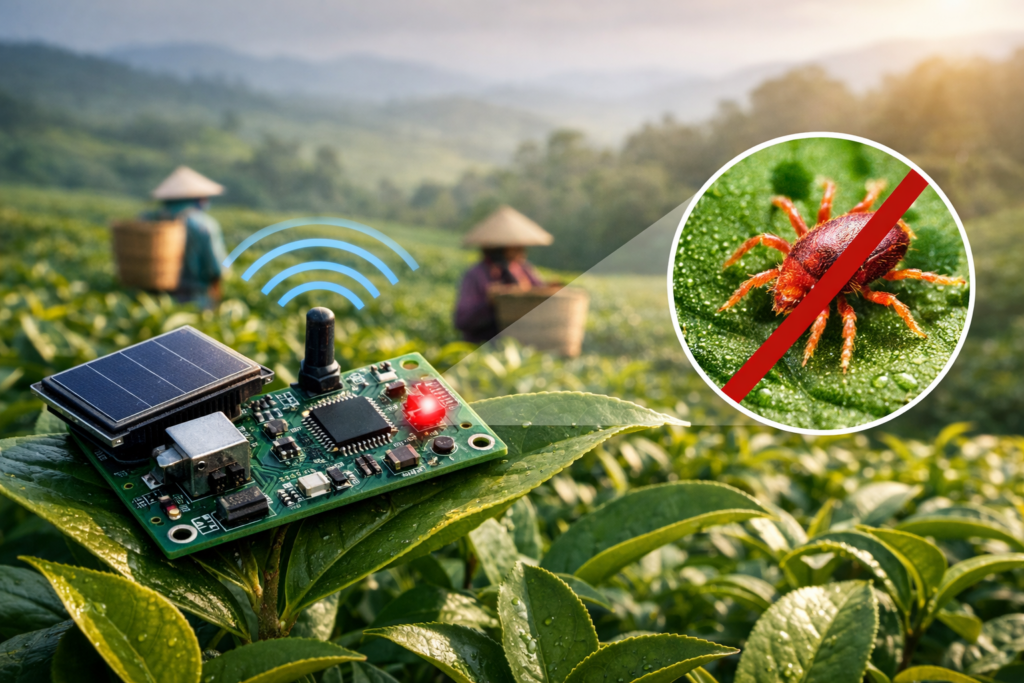
Researchers at North-Eastern Hill University (NEHU) in Shillong have engineered India’s first indigenous semiconductor chip aimed at mitigating infestations of the red spider mite, a pest notorious for damaging tea crops and eroding leaf quality across plantations in the Northeast and other tea-growing regions.
The chip, developed by NEHU’s Department of Electronics and Communication Engineering, is designed to repel the mites through targeted signals rather than conventional chemical pesticides, offering an environmentally friendlier approach to pest management. Initial testing suggests that such technology could reduce reliance on agrochemicals, aligning with sustainable and eco-aware agricultural practices. Unlike typical integrated circuits used in consumer electronics, this device operates as a field-oriented pest deterrent, potentially integrating sensing and signal-emission capabilities to disrupt the pest’s lifecycle or behavior. The concept reflects a broader trend in applied electronics for agriculture, where smart hardware is tailored to biological challenges rather than computing throughput.
NEHU’s prototype was fabricated in collaboration with the Semiconductor Laboratory (SCL) in Mohali, part of India’s national semiconductor ecosystem. The partnership underscores the university’s contribution to indigenous chip design and fabrication efforts under the India Semiconductor Mission, a government initiative to bolster domestic semiconductor innovation and reduce import dependency.
The development team including Dr. Pankaj Sarkar, Dr. Sushanta Kabir Dutta, Dr. Sangeeta Das, and Bhaiswajyoti Lahon are now focusing on field trials to validate performance in real-world tea gardens. These tests are expected to examine the chip’s operational durability under environmental stressors like heat, humidity, and rain, as well as its effectiveness in deterring mite activity over extended periods.
If successful at scale, the technology could signal a shift in how electronics intersects with integrated pest management, particularly as climate change is intensifying pest pressures in agricultural sectors worldwide. Integrated pest strategies currently emphasize reducing chemical loads to protect beneficial insects and soil health; NEHU’s chip could become part of that toolkit if field efficiency and cost-effectiveness are validated. The chip was formally presented to India’s Union Minister for Electronics and Information Technology in late November 2025, highlighting its strategic significance beyond academic research into commercially and socially relevant innovation.

