




Tested in cells and mice, the soft transistor withstands mechanical stress, fluid exposure, corrosion.
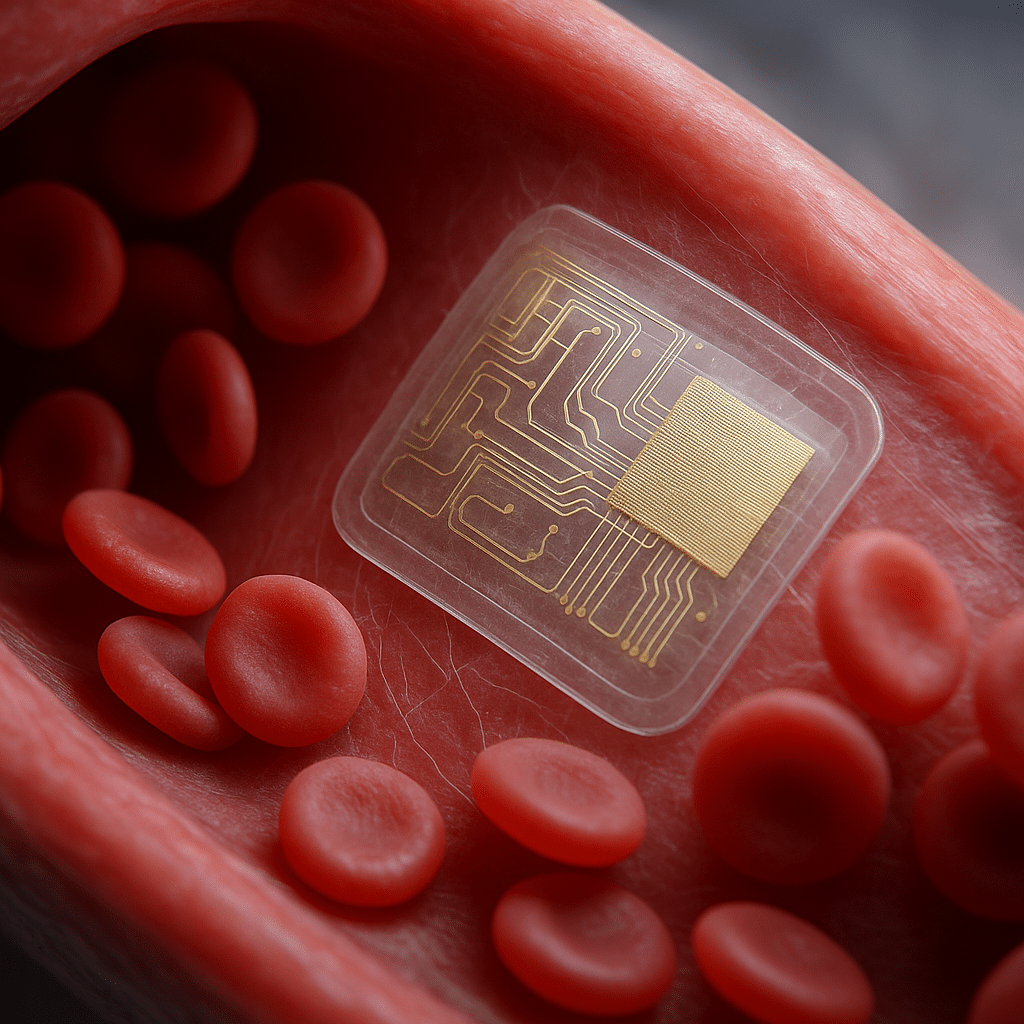
A team of researchers from Korea Advanced Institute of Science and Technology, develops a stretchable organic transistor using a soft elastomer and semiconducting nanofibres, using in human implantable devices that operate under physical strain and in contact with body fluids.
The device combines a medical-grade rubber, bromo isobutyl–isoprene rubber (BIIR), with a semiconducting polymer to form a composite to match the properties of human tissue. The material undergoes vulcanisation, strengthening the structure while preserving elasticity. The transistor maintains stable electrical performance under 50% strain and repeated mechanical cycles.
To protect against corrosion in biological environments, the team integrates a dual-layer electrode made of silver and gold. This configuration retains low resistance after immersion in artificial sweat and supports stable performance under stretching. The transistors also operate reliably when built into logic circuits, including inverters and logic gates.
In vitro tests using human dermal fibroblasts and immune cells show no adverse effects on cell growth or migration. Gene expression related to inflammation remains unchanged compared to controls. In vivo studies in mice reveal that the devices do not trigger significant immune responses or thick fibrous capsule formation. The composite generates less tissue reaction than polydimethylsiloxane (PDMS), a commonly used implant material.

The circuits are implanted subcutaneously in mice and maintain functionality over several days. Electrical measurements confirm consistent behaviour under strain and in physiological conditions. Histological analysis shows no major signs of tissue damage or immune cell infiltration.


