

Researchers developed conductive paint-on electrodes that improve wearable sensing, enabling colourful, washable and personalised health monitors with enhanced comfort, accuracy and durability.
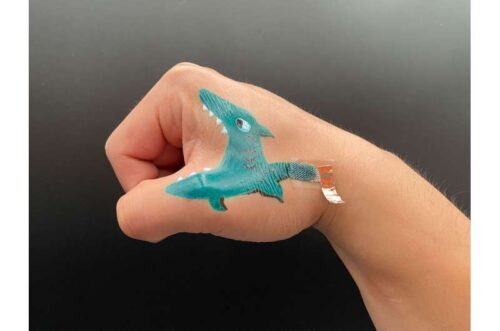
Researchers at Penn State University have developed paintable electrodes that can be applied directly to the skin as colourful, custom-designed wearable sensors for monitoring electrical signals from the human body. The technology combines conductive ink with skin-friendly materials to create flexible electrodes that are more comfortable, accurate and adaptable than many existing wearable sensors.
Detailed in the Proceedings of the National Academy of Sciences (PNAS), the conductive ink can be pigmented in virtually any colour and painted into personalised shapes, from simple patterns to decorative designs. Once applied, it dries in less than 10 minutes, forming functional electrodes that conform closely to the skin’s surface. Because the electrodes are painted directly onto the body, they eliminate the small air gaps common with conventional adhesive patches, improving signal quality and measurement accuracy.
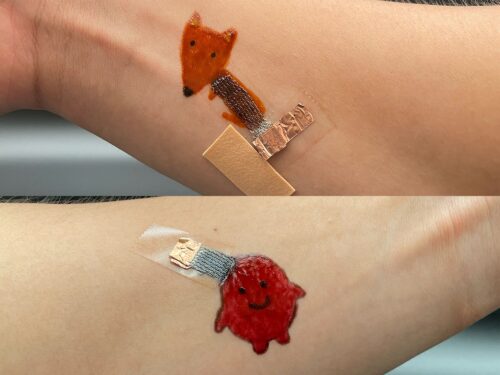
The electrodes can record a range of bioelectrical signals, including electrocardiograms (ECG) to monitor heart activity, electroencephalograms (EEG) to measure brain activity and electromyography (EMG) signals that track muscle contractions. In one demonstration, EMG signals collected from a user’s forearm were used to control a robotic prosthetic hand without physical contact.
The researchers also incorporated a porous silver textile that links the painted electrodes to a reusable electronic module. This porous structure allows moisture and hair to pass through more easily, improving comfort while maintaining strong adhesion and electrical conductivity. Tests showed the electrodes remained accurate during 12 hours of everyday activities and continued to perform reliably during exercise, resisting sweat and repeated movement.
Unlike conventional disposable patches, the painted electrodes can be washed away and reapplied when needed, while the electronic sensing module can be reused. The team believes the technology could support future wearable healthcare applications, including monitoring biomarkers such as glucose and cortisol. Beyond medicine, the researchers are exploring applications in plant science, where paintable sensors could create “smart plants” capable of monitoring environmental chemical exposure and plant health.