




A robotic bird that mimics kestrel movements has helped researchers uncover how birds maintain stability in turbulent air, offering new ideas for safer and more efficient drones.
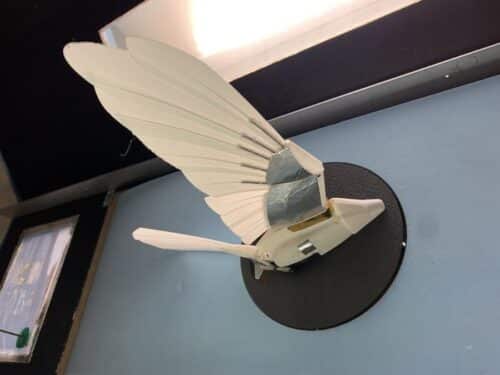
Researchers from RMIT University and University of Bristol have created a bio-inspired robotic bird that imitates the motions of kestrels to investigate the mechanisms behind how birds maintain stability when flying in turbulent airflow conditions. The discoveries can be useful for designing safe, efficient and more robust small unmanned aerial vehicles (sUAVs) .
Among the most stable fliers in the avian world is the nankeen kestrel. Researchers monitored its motion during gusts of wind using motion-capture technology in the RMIT Industrial Wind Tunnel Laboratory. They then constructed a robotic version of the bird, which was capable of imitating its characteristic wing and body motions to analyze the effects of those motions on flight stability.
“Birds don’t rely on a single response to wind gusts,” said RMIT researcher Matt Penn. “They constantly adjust their wings and tails to stay balanced, while the natural flexibility of their feathers and joints helps absorb sudden changes in airflow. They can also sense disruptions very quickly, which allows them to respond almost instantly and maintain control.”
It was discovered that there were several mechanisms used by the birds to deal with turbulence, and many of these techniques have the potential to improve manoeuvrability of small aircrafts. The robotic bird allowed the team to more precisely measure the forces involved.
“By creating a robot replica, we were able to measure how specific movements were contributing to steadiness in flight,” said Dr Mario Martinez Groves-Raines, who completed the research during his studies at RMIT and the University of Bristol. “We uncovered several unique techniques behind the kestrel’s impressive stability. Many of these techniques have the potential to improve manoeuvrability of small aircraft, which encounter similar challenges to kestrels.”
Associate Professor Abdulghani Mohamed, a senior research fellow at RMIT University, explained that these results pave the way for potential new ways of designing aircrafts that can better handle turbulence. The group will explore the methods by which kestrels interact with their surroundings and hopes these findings may also be applied to larger-scale aircraft and drone technology.


