Robotic hands that feel like humans are here. They can sense heat, weight, and resistance, making tasks safe and precise. See more…
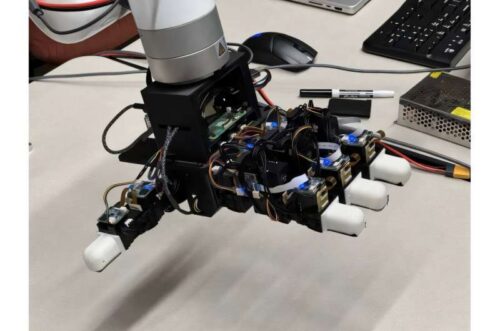
Robots often struggle with tasks humans do naturally, like adjusting grip strength or avoiding hot surfaces. These limitations can damage objects or the robot and reduce usefulness in everyday tasks. A key challenge in robotics has been giving machines instincts similar to humans so they can interact safely and efficiently with their environment. The MOTIF Hand created by a student team with USC Viterbi addresses this problem by adding human-like sensory abilities to robotic hands.
The MOTIF Hand can detect temperature, force, and depth simultaneously. This multimodal sensing allows the hand to respond safely and accurately in real time. For example, it can detect whether an object is hot without touching it, using a thermal camera built into the palm. Force sensing, combined with inertial measurement sensors, lets the hand assess the weight and resistance of objects through simple actions like flicking, shaking, or pressing. These abilities make the hand react more like a human hand, reducing the risk of dropping or damaging objects.
By integrating these sensors, the MOTIF Hand can perform everyday tasks more safely and reliably. It can handle delicate operations, avoid heat damage, and adjust grip automatically, making it suitable for applications such as factory work, cooking, and welding. Its durability and responsiveness improve both research outcomes and practical performance in robotic systems.
The MOTIF Hand is based on the open-source LEAP Hand. Its developers plan to make the MOTIF Hand open-source as well, providing a platform for the robotics community to build on. The sensory advancements in the hand are designed to be accessible to research teams, supporting further development of multimodal robotic hands and more human-like robotic interactions.