

UCL researchers found that a simple salt, guanidinium thiocyanate, can make perovskite solar cells more efficient and durable—bringing the technology closer to outperforming silicon and reshaping the future of clean energy.
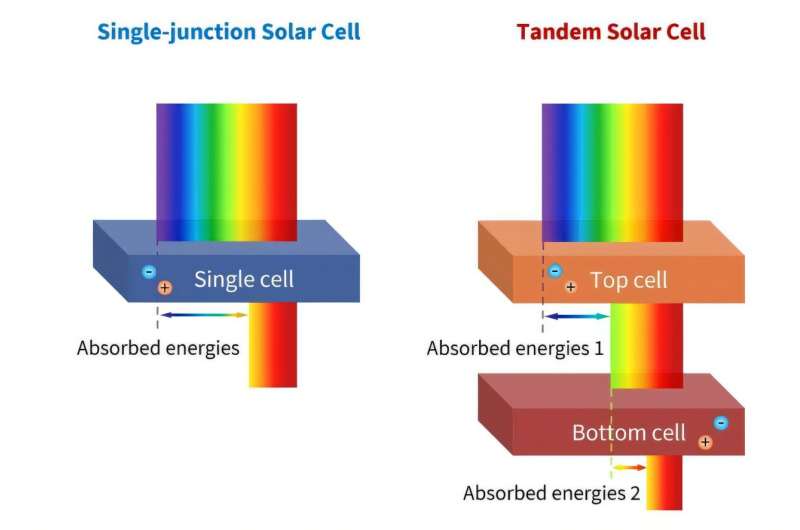
A common salt may hold the key to making next-generation solar cells both more powerful and more durable. Researchers at University College London (UCL) have shown that guanidinium thiocyanate can significantly improve the efficiency and stability of perovskite solar cells—a technology already tipped to outperform traditional silicon panels.
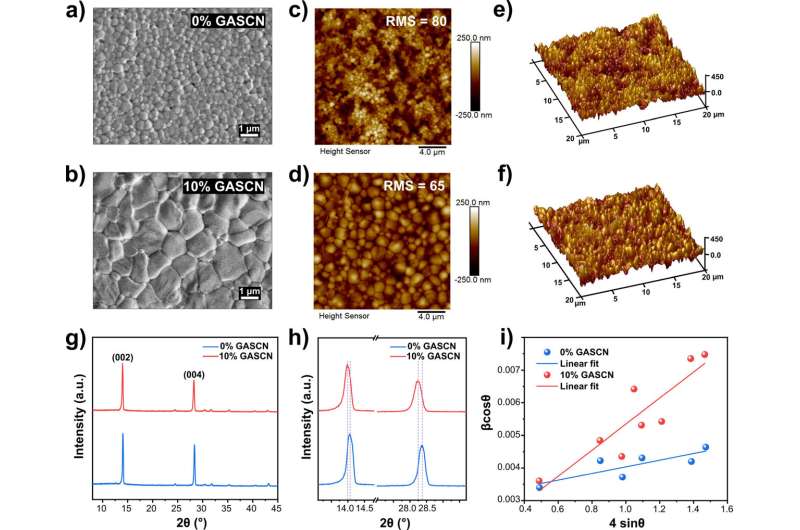
The findings, published in the Journal of the American Chemical Society, demonstrate how the salt slows and controls the formation of perovskite crystals during manufacturing. This results in smoother, more uniform layers with fewer defects—crucial for boosting both performance and lifespan.
Perovskite tandem solar cells, which stack multiple layers tuned to absorb different parts of the solar spectrum, are seen as the future of ultra-efficient photovoltaics. The UCL team applied guanidinium thiocyanate to mixed tin-lead perovskites, often used as the bottom layer in tandem devices. The result: a record 22.3% efficiency for this material, edging close to silicon’s laboratory best of 27%. For comparison, most commercial silicon panels today average around 22%.
“All-perovskite tandem devices have already crossed 30% efficiency in the lab,” said Dr. Tom Macdonald, lead author from UCL Electronic & Electrical Engineering. “Our method provides a simple yet powerful way to further raise efficiency while also making cells more stable—both critical for commercial success.”
By slowing crystal growth, the guanidinium additive reduces imperfections that typically arise when perovskite layers form too quickly. Fewer flaws translate to longer-lasting devices and higher energy yields. First author Yueyao Dong noted that the study offers “valuable insight into crystal formation,” while co-author Dr. Chieh-Ting Lin (National Chung Hsing University) highlighted its potential for fine-tuning perovskite structures to push efficiency limits even higher.
Perovskites have emerged as one of the most promising alternatives to silicon over the past decade. Unlike silicon, they can be manufactured at lower temperatures using simpler, less energy-intensive methods. This makes them attractive for scalable production and enables applications such as lightweight and flexible solar panels.
While guanidinium salts have appeared in earlier perovskite studies, the UCL research provides new clarity on how they influence crystal growth. As global demand for clean, low-cost energy accelerates, breakthroughs like this could pave the way for commercially viable perovskite solar panels that are more efficient, durable, and affordable than ever.