A project brings internet and power to remote areas, helping teams track, respond, and protect nature faster. See more!
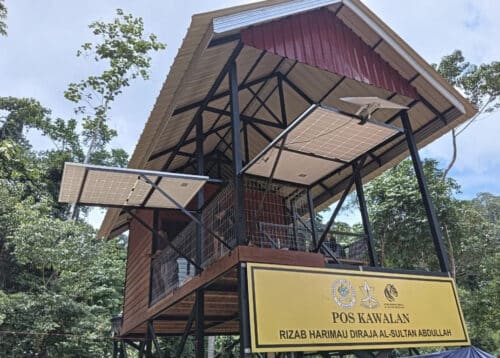
Deep in the heart of Malaysia’s Ulu Tembeling rainforest, where the Al-Sultan Abdullah Royal Tiger Reserve stretches across dense greenery, conservation work has often faced a common challenge like staying connected. Rangers and researchers navigating remote terrain have long struggled with limited communication, making coordination, incident reporting, and emergency response difficult.
EdgePoint Towers Sdn Bhd, part of ASEAN-based telecom infrastructure company EdgePoint Infrastructure, has rolled out its first Connectivity for Conservation project at the Al-Sultan Abdullah Royal Tiger Reserve in Ulu Tembeling, Jerantut, Pahang. The initiative, developed in partnership with the Pahang State Parks Corporation (PTNP) and The Habitat Foundation (THF), aims to improve conservation efforts through advanced communication technology.
Muniff Kamaruddin, Chief Executive Officer of EdgePoint Towers, said, “As part of our Environmental, Social and Governance (ESG) commitment, we are proud to contribute to tiger conservation efforts through the use of technology. Protecting biodiversity is a crucial component of sustainable development, and by leveraging our expertise in connectivity and infrastructure, we aim to strengthen monitoring and protection of Malaysia’s endangered tigers. Through this partnership, we have worked closely with stakeholders to understand and address the complex challenges posed by difficult terrain, unpredictable weather, and wildlife-specific needs”.
Remote Areas Go Online
The project leverages Low Earth Orbit (LEO) satellite technology to link remote guard posts and research stations within the rainforest. This connectivity enables rangers and research staff to communicate in real time, report incidents, navigate, and track locations, which are critical functions for monitoring wildlife and responding to emergencies in areas without traditional infrastructure.

Limited fuel and power in remote areas demand strong, reliable solutions and careful planning to keep equipment running with minimal on-site work. Using off-grid solar and battery systems, these setups give rangers and researchers consistent access to critical data, allowing faster responses to tiger sightings and anti-poaching activities. The project also shows how technology can guide smarter, data-driven wildlife protection strategies.
LEO satellites operate at altitudes of 500–2,000 km, much closer than conventional geostationary satellites. This proximity reduces signal delay, allowing high-speed, low-latency communication in dense forest environments where quick coordination can directly impact conservation outcomes.
To ensure reliable operation in off-grid locations, EdgePoint combines satellite connectivity with solar-powered and battery-backed systems. While the project does not specify which satellite constellation is used, the approach demonstrates how telecom technology can directly support ecological conservation by maintaining connected habitats and enabling the safe movement and survival of wildlife.
The Connectivity for Conservation initiative represents a significant step in using technology to address environmental challenges, offering real-time monitoring and support in critical habitats while also contributing to climate resilience and biodiversity preservation.
Justine Vaz, Executive Director from The Habitat Foundation added, “This pioneering initiative highlights the power of collaboration in driving meaningful conservation outcomes. It demonstrates the synergistic potential of partnerships between corporations, government agencies, and NGOs in addressing real-world challenges. The enhanced connectivity will improve coordination and data sharing among conservation stakeholders operating in remote landscapes. It will also be instrumental in reinforcing enforcement coordination and strengthening efforts to protect Malaysia’s endangered tigers. We look forward to seeing the results and insights from this program, which we hope will inform future policy decisions within the reserve and the wider conservation community. Through this partnership, we remain hopeful that we can contribute to the population recovery of this iconic Malaysian species”
Through this initiative, EdgePoint’s Connectivity for Conservation project shows how telecom infrastructure can play a vital role in ecological preservation, giving both humans and wildlife the tools they need to thrive in challenging environments.