




A propulsion system uses one fuel for maneuvers and control, helping small satellites reduce complexity and support more mission types in space.
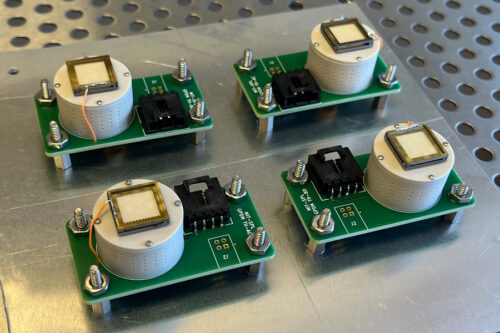
MIT engineers have demonstrated a propulsion approach that allows small satellites to use a single propellant for both chemical and electric thrusters, a development that could reduce spacecraft complexity while expanding mission capabilities.
The system combines the high thrust needed for rapid maneuvers with the fuel efficiency and precision of electric propulsion. By using one propellant to power both systems, satellites could avoid carrying separate fuel supplies, reducing the size and weight of onboard propulsion hardware.
The concept will be tested in space through NASA’s Green Propulsion Dual Mode mission, scheduled to launch in November. The CubeSat mission will carry one chemical thruster and four electrospray thrusters, all drawing propellant from a single tank. The mission is expected to be the first in-orbit demonstration of a shared-fuel propulsion system for a small spacecraft.
The work centers on Advanced SpaceCraft Energetic Non-Toxic (ASCENT), a propellant originally developed as a replacement for hydrazine, a commonly used spacecraft fuel that is difficult to handle. Because ASCENT is also an ionic liquid, MIT researchers investigated whether it could be used in electrospray thrusters, which traditionally rely on specialized ionic liquid fuels.
Tests showed that ASCENT delivered performance comparable to conventional electrospray propellants. The results indicate that the same fuel can support both high-thrust chemical propulsion and low-thrust electric propulsion, enabling satellites to switch between rapid repositioning and fuel-efficient long-duration maneuvers.
To evaluate ASCENT, the researchers filled CubeSat-scale propulsion reservoirs with the propellant and mounted electrospray thrusters on a test spacecraft inside a vacuum chamber. Using a magnetic levitation platform to simulate space conditions, they operated the thrusters at different voltage levels and measured thrust and fuel efficiency during experiments lasting up to 100 hours.
The effort originated from a collaboration with the U.S. Air Force, which developed ASCENT as an alternative to hydrazine. The shared properties of ASCENT and traditional electrospray fuels led researchers to explore whether a single propellant could support both propulsion methods.
If the upcoming NASA mission is successful, future small satellites could use chemical propulsion for quick orbital adjustments and electric propulsion for long-duration travel while relying on a single fuel supply. Such a system could support missions ranging from Earth observation to deep-space exploration without increasing spacecraft size or propulsion complexity.

