

Durable, low-cost, and easy to fabricate, it could power applications from wearables and AR/VR sensing to smart textiles and next-gen wireless devices.
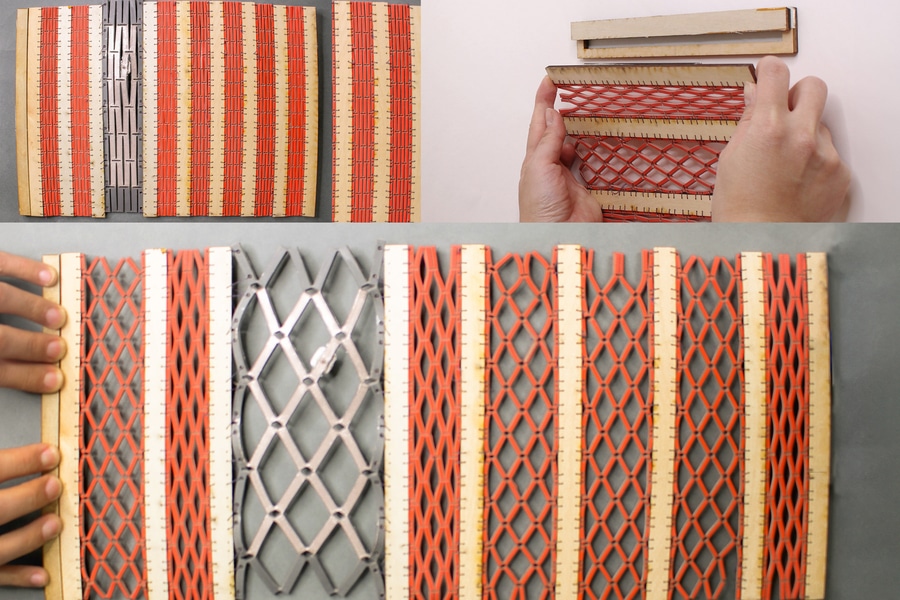
MIT researchers have developed a reconfigurable “meta-antenna” that can change its frequency range simply by being stretched, bent, or compressed—eliminating the need for multiple antennas or moving parts. The breakthrough promises cheaper, more versatile antennas for wireless communication, sensing, and wearable devices.
Unlike traditional static antennas, the new design leverages auxetic metamaterials—engineered structures whose properties depend on their geometry. By deforming the metamaterial, the antenna’s resonance frequency shifts, enabling it to operate across wider frequency ranges and adapt to changing environments. The team’s tests showed the antenna is both durable—surviving more than 10,000 compressions—and inexpensive to fabricate with simple tools like a laser cutter and conductive spray paint.
Potential applications range from respiration monitoring (detecting chest expansion), to AR/VR motion tracking, wireless power transfer in wearables, and multi-protocol communication. The researchers even integrated the antenna into smart headphones that switch between noise-cancelling and transparent modes as the structure bends, and into a smart curtain that dynamically adjusts indoor lighting.To support customization, the group also developed a design tool that allows users to generate antenna patterns tailored to specific needs. Users can define patch size, dielectric thickness, and unit-cell ratios; the tool then simulates the resulting frequency response.
“Most antennas are static—once fabricated, their properties are fixed,” said lead author Marwa AlAlawi, a mechanical engineering graduate student at MIT. “With auxetic metamaterials, one antenna can seamlessly reconfigure into multiple states, unlocking new possibilities in both communication and sensing.”
Looking ahead, the team aims to explore 3D metamaterial antennas, improve material flexibility, and extend their design platform for broader applications—from smart textiles to biomedical monitoring.
With its combination of adaptability, simplicity, and durability, MIT’s shape-changing meta-antenna signals a new era where communication hardware can physically reconfigure to meet shifting demands.